Pagination meaning is the simple yet powerful concept of dividing large amounts of content into smaller, easy-to-navigate pages (so users and search engines don’t get overwhelmed). If you’ve ever clicked “Next” on a blog, product list, or Google results page, you’ve already experienced pagination in action (even if you didn’t know the term).
In today’s SEO-driven, user-focused, and performance-optimized web world, understanding pagination meaning is essential for website owners, bloggers, developers, and digital marketers. Proper pagination improves page speed, enhances user experience, and helps search engines crawl, index, and rank content more effectively (which directly impacts visibility).
When pagination is done right, it feels smooth, intuitive, and scalable. When done wrong, it can hurt rankings, confuse users, and waste crawl budget (a costly SEO mistake). That’s why learning pagination meaning isn’t just technical knowledge—it’s a strategic advantage for anyone serious about online growth.
Why Pagination Matters Today
Pagination matters because how we consume content has changed.
- We scroll endlessly
- We skim instead of reading
- We jump between pages, comments, and threads
So when someone mentions pagination, they’re often talking about organization, flow, or broken content, not just numbers at the bottom of a page.
In chats and online talk, pagination can hint at:
- Content being split
- Information feeling incomplete
- Someone needing “the next part”
It’s a small word, but it carries big context.
Why People Misunderstand Pagination
Most misunderstandings happen because:
- People think pagination is only for websites
- It sounds technical, not conversational
- It’s used differently across platforms
For example:
- A developer means page navigation
- A gamer means level or menu breaks
- A casual user means “part 2”
Same word, different intent.
What Does “Pagination” Mean?
Simple Definition
Pagination meaning:
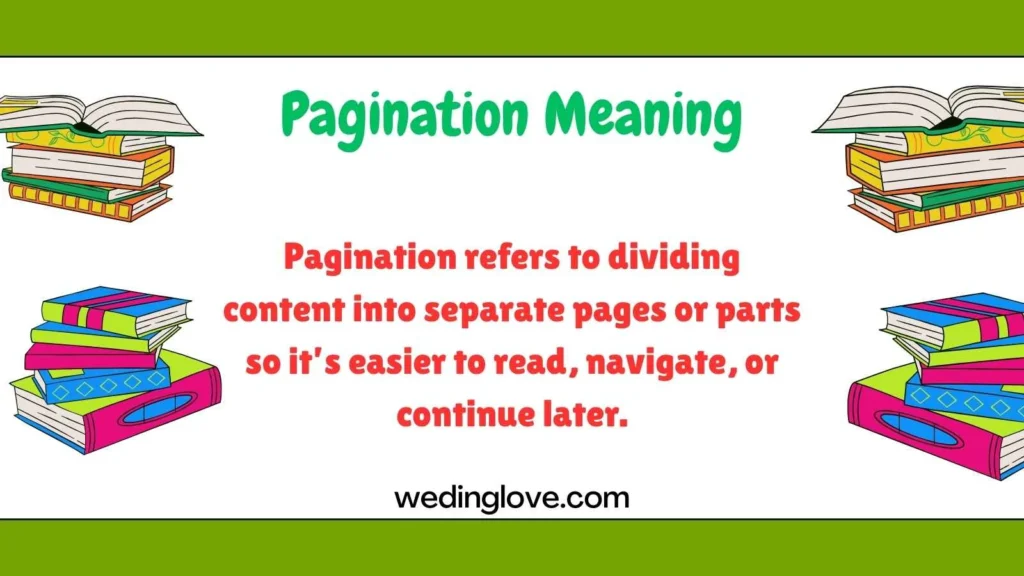
Pagination refers to dividing content into separate pages or parts so it’s easier to read, navigate, or continue later.
In casual online usage, it can also mean:
- “This content is split”
- “Where’s the next part?”
- “This should’ve been continuous”
Origin and Evolution
Pagination comes from the Latin word pagina, meaning page.
Originally, it meant:
- Numbering pages in books
Then it evolved into:
- Websites showing page numbers
- Forums breaking long threads
- Apps dividing content into sections
Now, in chats and comments, it’s often used informally to point out structure problems or missing continuation.
TL;DR
Pagination = splitting content into pages or parts
Online slang use = “This feels cut off” or “Where’s the next page?”
How to Use “Pagination” Correctly
When to Use It
Use pagination when you’re talking about:
- Long posts split into parts
- Websites with numbered pages
- Threads that stop suddenly
- Content navigation issues
Examples:
- “The pagination is confusing.”
- “This needs better pagination.”
- “Bad pagination ruined the flow.”
When to Avoid It
Avoid using pagination if:
- You just mean scrolling
- You’re talking about loading speed
- You’re unsure of the context
Instead of:
-
“Pagination is slow”
Say: - “The page loads slowly”
Tone and Intent
Pagination is usually:
- Neutral
- Technical
- Mildly critical
It’s rarely emotional, but it can sound complaining depending on tone.
Common Contexts Where Pagination Is Used
Texting:
Used jokingly or casually when messages are long.
Social Media:
Refers to carousel posts, threads, or split captions.
Discord:
Used in servers with guides, rules, or long discussions.
Gaming:
Menus, inventories, or level screens.
Forums:
Page numbers in comment sections or threads.
Real Life Examples
Text Chat Examples
- “Bro, your message needs pagination 😂”
- “Is there a next page or what?”
- “This chat has terrible pagination.”
Social Media Captions
- “Why is this thread paginated like a book?”
- “Part 1 done, pagination in comments.”
- “Hate when stories have forced pagination.”
Funny or Relatable Scenarios
- Reading a long argument split into 12 pages
- Clicking “Next” five times for one answer
- A story that ends mid-sentence on page one
These moments are where pagination becomes part of everyday talk.
Correct vs Incorrect Usage
Correct:
- “The article’s pagination makes it hard to follow.”
Incorrect:
-
“Pagination means scrolling down.”
Scrolling is continuous. Pagination is divided.
Common Mistakes and Misunderstandings
- Confusing pagination with infinite scroll
- Using it to describe loading time
- Thinking it only applies to books
- Using it without context in casual chat
If the listener doesn’t understand tech terms, explain it simply.
Related Slang and Variations
While pagination itself isn’t slang, it’s often used alongside modern terms like:
- Threaded – split into replies
- Part 2 – continuation content
- Carousel – swipe-based pagination
- Next page energy – joking reference
Platform-Specific Usage
TikTok:
Pagination refers to multi-part videos or slides.
X (Twitter):
Used for threads that should’ve been one post.
Reddit:
Page-based comments or guides.
Memes:
Jokes about clicking “next” too many times.
Freshness: Pagination in 2026 Trends
In 2026, pagination is being talked about more because:
- Short-form content dominates
- Users hate unnecessary breaks
- Platforms favor smooth reading
People now complain about pagination the same way they complain about ads — it interrupts the experience.
Expect to see it used more sarcastically in comments and memes.
FAQs About Pagination Meaning
1. What is pagination in simple words?
It means splitting content into pages instead of showing everything at once.
2. Is pagination still relevant in 2026?
Yes, especially for long content and clarity.
3. Is pagination the same as infinite scroll?
No. Pagination uses pages; infinite scroll loads endlessly.
4. Why do people complain about no pagination?
Because long content becomes hard to read or find.
5. Can pagination be used as slang?
Yes, often jokingly in chats or comments.
6. Where is pagination most commonly used?
Websites, forums, comment sections, and discussions.
7. Does pagination improve readability?
Yes, it reduces overload.
8. Why do developers talk about pagination so much?
It affects performance, structure, and user experience.
9. Can pagination apply to messages?
Casually, yes—people use it humorously.
10. Is pagination outdated?
No, it’s evolving with modern platforms.
Conclusion
The pagination meaning goes beyond books and websites. Today, it’s a flexible term used to describe how content is split, continued, or interrupted across platforms.
Understanding it helps you:
- Follow online conversations
- Communicate clearly
- Avoid confusion in chats and posts
Once you know the context, pagination stops sounding technical and starts making sense.
👉 Comment your favorite slang and tell us where you’ve seen pagination used online

Smith is a passionate relationship writer at wedinglove.com, sharing heartfelt ideas, anniversary inspirations, and love-filled moments. With a deep belief in lifelong bonds, Smith helps couples celebrate every milestone with meaning, emotion, and timeless romance.