Well said meaning is more than just a simple phrase—it’s a powerful expression used to show agreement, appreciation, or admiration for someone’s words. If you’ve ever wondered why people say “well said” in chats, texts, or conversations, you’re about to discover the true essence, impact, and importance behind it. This phrase can elevate communication, make your responses memorable, and even help you connect with others on a deeper level.
Understanding the well said meaning is essential for anyone who wants to communicate effectively, confidently, and professionally in today’s fast-paced digital world. Whether you’re texting a friend, commenting on social media, or writing a formal message, knowing when and how to use this phrase can make your words stand out, sound authentic, and leave a lasting impression.
Why the Slang Matters
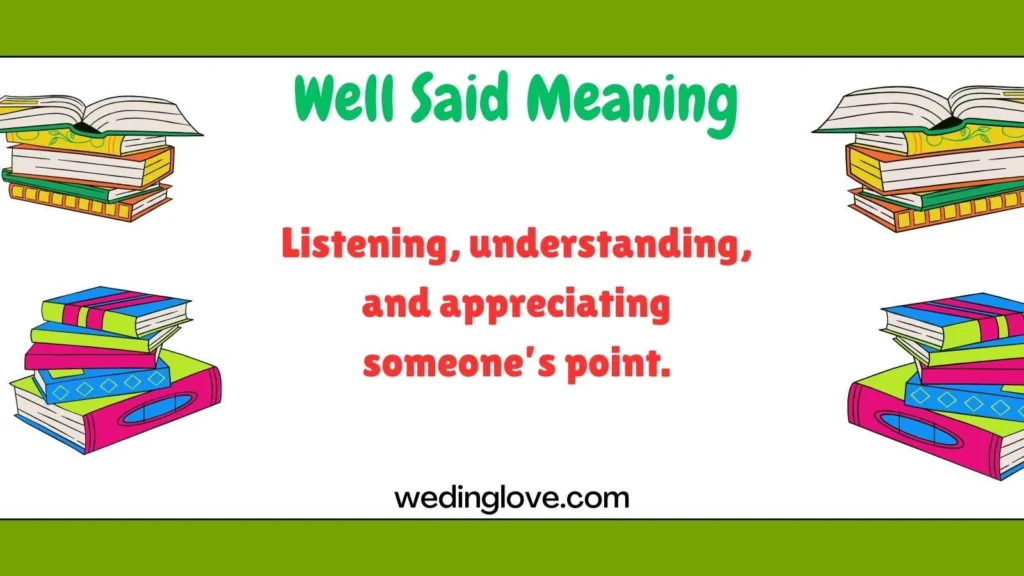
“Well said” is more than just a compliment—it’s a quick way to show you’re listening, understanding, and appreciating someone’s point. In an era of fast messaging:
- People skim messages instead of reading long posts.
- Showing acknowledgment with a short phrase saves time.
- It can boost connection and conversation flow without seeming formal.
For influencers, gamers, and casual texters alike, it’s a small phrase with big social impact.
Why People Misunderstand It
Many assume “well said” is just polite or even sarcastic. In reality, its meaning can shift depending on context:
- In serious discussions: Genuine agreement or praise.
- In playful chats: Sarcasm or teasing.
- On social media: A quick reaction to a post or tweet.
Without tone cues, some might misread it, especially in text-based communication. This is why understanding its usage nuances is key.
What Does “Well Said” Mean?
Simple Definition
Well said: A phrase used to express agreement, appreciation, or approval for something someone just said or wrote.
Origin + Evolution
- Early use: Spoken English, often in formal debates or conversations.
- Digital adoption: By 2010s, became common in texting and online comments.
- Modern 2026 use: Short, casual, sometimes sarcastic acknowledgment across all digital platforms.
Short TL;DR
TL;DR: “Well said” = You expressed that perfectly or I agree with what you just said.
How to Use “Well Said”
When to Use / Avoid
- Use: To agree, compliment, or validate a statement.
- Avoid: When the recipient might interpret sarcasm if tone isn’t clear.
Tone & Intent
- Friendly / genuine: Shows appreciation.
- Sarcastic / joking: Can tease or lightly criticize.
- Professional: Polite acknowledgment in remote meetings or emails.
Contexts: Texting, Social Media, Discord, Gaming, Forums
- Texting: Reply to a friend’s wise or funny message.
- Social media: Comment on posts, threads, or replies you resonate with.
- Discord / Gaming: Acknowledge team strategies or clever plays.
- Forums: Support someone’s argument or detailed explanation.
Real Life Examples

Text Chats
- Friend: “I can’t believe we finished the project early!”
- You: “Well said! That teamwork was amazing.”
Social Captions
- Instagram comment: “Well said! Couldn’t agree more with this quote.”
Funny/Relatable Scenarios
- Gaming chat: “We lost, but your strategy was perfect.”
- Reply: “Well said… now let’s try again!”
Correct vs Incorrect Usage
- ✅ Correct: “Well said, that’s exactly what I was thinking.”
- ❌ Incorrect: “Well said” after a confusing or irrelevant statement.
Common Mistakes & Misunderstandings
- Using it without understanding tone → may seem sarcastic unintentionally.
- Overusing → loses impact and can seem robotic.
- Ignoring context → doesn’t fit casual jokes or off-topic conversations.
- Confusing it with “well said about yourself” → usually directed at someone else.
Related Slang & Variations
- Agreed → Simple acknowledgment.
- Preach → Strong agreement, often playful.
- Facts → Short, trendy approval.
- Mood → Casual resonance with a feeling or statement.
Platform-Specific Usage
- TikTok / Reels: Often used in comment threads to react to viral quotes.
- X (Twitter): Quick reply or quote tweet acknowledgment.
- Discord / Gaming: Shows team agreement or validation in strategy chats.
- Memes / Chats: Sarcasm or humor-heavy contexts.
Freshness (2026 Trends)
- Using emojis with “well said” to convey tone (😂👏❤️).
- Abbreviations like “WS” appearing in tight threads.
- Short reaction videos on TikTok showing “well said” moments.
- Cross-platform influence → memes, gaming streams, social commentary.
FAQs About “Well Said”
1. Is “well said” formal or casual?
It can be both. Online, it’s mostly casual; in meetings, more formal.
2. Can “well said” be sarcastic?
Yes, tone and context are everything.
3. Is it appropriate on professional emails?
Yes, when used sparingly to acknowledge a colleague’s point.
4. What’s the difference between “well said” and “agreed”?
“Agreed” is neutral; “well said” adds appreciation or emphasis.
5. Can I use it for memes or jokes?
Absolutely! Often paired with sarcasm or playful irony.
6. Is there a short form?
Yes, “WS” or even just 👏 in reaction threads.
7. Which platforms use it most in 2026?
TikTok, X, Discord, Instagram, and gaming chats.
8. Does it replace other slang?
It complements, rather than replaces, agreement slangs like “facts” or “preach.”
9. Can I use it when I disagree?
Not usually—use with caution, or it may confuse the recipient.
10. Why has it stayed popular for so long?
It’s short, flexible, and conveys both approval and engagement efficiently.
Conclusion + CTA
In 2026, “well said” is more than a polite phrase—it’s a versatile tool for digital conversations. From TikTok comments to Discord strategies, mastering it keeps your communication sharp, trendy, and relatable.
Quick summary:
- Shows agreement, validation, or sarcasm.
- Works across texting, social media, and gaming platforms.
- Tone and context are key.
💬 Comment your favorite slang! How do you use “well said” in your chats?

Smith is a passionate relationship writer at wedinglove.com, sharing heartfelt ideas, anniversary inspirations, and love-filled moments. With a deep belief in lifelong bonds, Smith helps couples celebrate every milestone with meaning, emotion, and timeless romance.