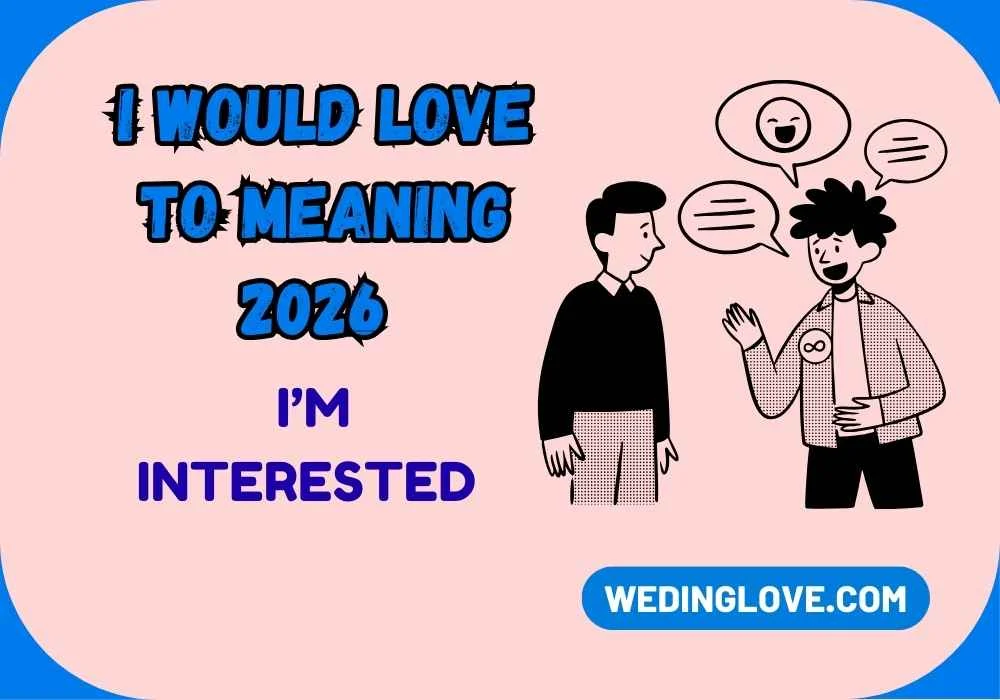
I would love to meaning often sparks curiosity because it goes beyond a simple expression of desire—it reflects emotions, intentions, and personal connections in communication.
In today’s fast-paced digital world, understanding the true essence of phrases like this can make a huge difference in how you express yourself, build relationships, and connect with others.
From casual texting to heartfelt messages, knowing the deeper meaning helps you communicate with clarity, sincerity, and confidence. Many people use this phrase without realizing its emotional weight or subtle nuances, which can sometimes lead to misunderstandings.
We’ll explore the different contexts, interpretations, and real-life examples of “I would love to,” so you can speak and write more authentically, leaving a lasting impression on anyone you interact with.
Why the Slang Matters
Even though it looks like a regular sentence, “i would love to” has become a social shorthand in online conversations. People often use it to:
- Show genuine interest without sounding too formal
- Respond politely to invitations or requests
- Signal excitement or readiness casually
Misinterpreting it can lead to confusion or missed social cues, especially in quick chat environments where tone is hard to convey. Knowing its subtleties can make your digital interactions more effective and fun.
Why People Misunderstand It
Many people confuse “i would love to” with literal promises or assume it’s a guarantee of action. In reality:
- It’s often polite and conditional, not a binding commitment
- Tone and punctuation drastically change meaning
- “I would love to!” = genuine enthusiasm
- “I would love to…” = hesitant or non-committal
- Online culture sometimes shortens or emojis-ify it, altering perception
Understanding context and platform is key to decoding intent.
What Does “i would love to” Mean?
Simple Definition
“i would love to” is a casual, polite phrase used to express willingness, interest, or excitement about an invitation, idea, or action.
Origin + Evolution
- Origins: Rooted in polite English speech, often used in letters or face-to-face conversations
- Digital Evolution: Became a texting and social media staple in early 2010s, now a versatile online expression
- Current Use: Abbreviated sometimes to “I’d love to”, often paired with emojis to convey tone
TL;DR
“i would love to” = I’m interested / I want to / I’m excited (depending on context).
How to Use “i would love to”
When to Use / Avoid
Use it when:
- Responding positively to invitations or offers
- Wanting to express polite enthusiasm online
- Engaging with friends or followers casually
Avoid it when:
- You need to give a firm commitment
- Formal business correspondence requires clarity
- Overusing it in sarcastic or ambiguous contexts
Tone & Intent
The tone can range from friendly and excited to polite but reserved, depending on punctuation, emojis, and context.
Contexts
- Texting: Quick responses to friends or family
- Social Media: Comments, DMs, captions
- Discord / Gaming: Agreeing to game sessions or events
- Forums / Communities: Expressing interest politely without overcommitment
Real Life Examples

Text Chats
- Friend: “Want to join the movie night?”
- You: “i would love to! 🎬” ✅
- Friend: “Can you help me with my project?”
- You: “i would love to…” ❌ (sounds hesitant)
Social Captions
- “Just got invited to the launch party, i would love to go!”
- Paired with emojis like ❤️ or ✨ to show excitement
Funny / Relatable Scenarios
- Friend: “Beach trip tomorrow?”
- You: “i would love to… if I survive this Monday 😂”
- Highlights humor while maintaining positive intent
Correct vs Incorrect Usage
Correct: “i would love to join the game night!” ✅
Incorrect: “i would love to join… maybe later” ❌ (confuses the reader)
Common Mistakes & Misunderstandings
- Overusing it: Can seem insincere
- Ignoring tone: A simple ellipsis can make it sound doubtful
- Misreading emojis: ❤️ vs 🙃 drastically changes the meaning
- Platform mismatch: Works casually on chats, not formal emails
Related Slang & Variations
- “I’d love to” – slightly formal, interchangeable
- “would love that” – shorter, friendlier
- “luv to” – informal, text-heavy, often used in DMs
Platform-Specific Usage
- TikTok / X: Paired with hashtags or emojis for trendiness
- Discord / Gaming: Shortened and casual in voice chats or messages
- Instagram / Threads: Seen in comments, story replies, and captions
Freshness (2026 Trends)
- Still widely used across all major platforms
- Popular in memes, threads, and reaction GIFs
- Increasingly paired with AI-generated replies or chatbots, requiring awareness of intent
- Seen in threaded responses on X (formerly Twitter) and interactive polls on TikTok
FAQs
1. Is “i would love to” formal or casual?
It’s casual in online chat but polite enough for semi-formal messages.
2. Can I use it sarcastically?
Yes, tone indicators like ellipses or 🙃 emoji signal sarcasm.
3. Does it always mean “I will”?
Not necessarily—it expresses interest, not guaranteed action.
4. Is “I’d love to” the same as “i would love to”?
Yes, just slightly more formal and contracted.
5. Can it be used in professional chats?
Yes, but avoid overuse and unclear ellipses.
6. How do emojis affect meaning?
❤️ or 😍 = excitement; 🙃 = playful sarcasm; … = hesitation
7. Is it used in gaming?
Frequently, for joining sessions or expressing agreement politely.
8. Can it appear in memes?
Yes, often humorously paired with reactions or exaggerations.
9. Do younger audiences use it differently?
Yes, often shortened or paired with slang like “luv to” in DMs.
10. Is it trending in 2026?
Yes, remains popular due to clarity, politeness, and versatility.
Conclusion
“i would love to” is a versatile, polite, and trend-aware phrase for expressing interest, enthusiasm, or polite engagement. Understanding context, tone, and platform ensures you use it effectively and avoid misunderstandings.
Comment your favorite slang! Share how you use “i would love to” or other phrases in your chats, captions, and gaming sessions.