with love meaning goes far beyond a simple sign-off — it carries warmth, emotional connection, sincerity, and heartfelt intention in both personal and professional communication.
Whether written in a letter, text message, card, or email, this phrase subtly expresses care, affection, and genuine goodwill, making the message feel more intimate and thoughtful.
Many people wonder when it’s appropriate to use it, what tone it conveys, and how it compares to alternatives like “best regards” or “yours truly.” Understanding the true context, emotional nuance, and cultural usage helps avoid misunderstandings while strengthening relationships.
In modern conversations, especially in digital communication, knowing the deeper meaning behind this phrase can enhance how your words are perceived and ensure your message reflects the right level of kindness and respect.
Why the slang matters
Language online is short and emotional. Small phrases carry big meaning.
“With love” matters because it:
- Adds kindness to a message
- Signals good intentions
- Softens criticism or advice
- Shows closeness or respect
- Prevents messages from sounding harsh
In digital spaces where tone is hard to read, this phrase works like a friendly smile.
Why people misunderstand it
Many people read too much — or too little — into “with love.”
Common reasons for confusion:
- Some think it always means romantic feelings
- Others see it as just a formal closing
- Tone depends on relationship context
- Cultural differences change interpretation
- It can be used sincerely or playfully
For example, a friend saying “with love” feels casual. A coworker using it may feel formal or polite.
What Does “with love” Mean?
Simple definition
“With love” means sending a message with care, kindness, or warm feelings toward the person receiving it.
It shows emotional goodwill — not always romance.
Origin + evolution
The phrase comes from traditional letter writing. People ended letters with phrases like:
- Yours sincerely
- Warm regards
- With love
As communication moved online, the phrase stayed. Now it appears in:
- Text messages
- Emails
- Social captions
- Comments
- Notes
Today, it can feel heartfelt, playful, or even slightly humorous depending on tone.
Short TL;DR
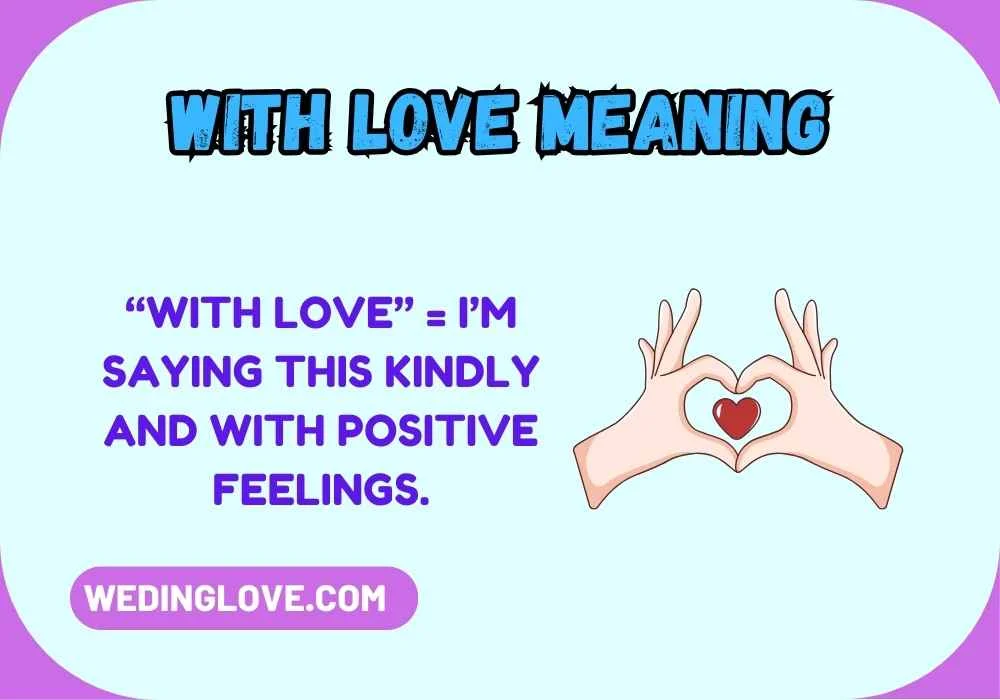
“With love” = I’m saying this kindly and with positive feelings.
How to Use “with love”
When to use
Use it when you want to:
- Show appreciation
- Express care
- Give gentle advice
- End a warm message
- Add emotional softness
Examples:
- Thank-you messages
- Supportive notes
- Friendly reminders
- Personal emails
When to avoid
Avoid it when:
- Writing formal legal or strict business messages
- Giving urgent instructions
- Communicating with people who may misread tone
- Delivering serious criticism
Tone & intent
Tone can vary:
- Warm — genuine affection
- Friendly — casual kindness
- Softening — easing tough words
- Playful — light humor
Intent depends on relationship.
Contexts
Texting
Used between friends, partners, or family to show warmth.
Social media
Common in captions or replies on platforms like TikTok or X.
Discord
Often used in supportive communities or friendly chats on Discord.
Gaming
Players may use it jokingly after giving advice or feedback.
Forums
Used to soften opinions or disagreements.
Real Life Examples
Text chats
- “Take your time, you’ve got this — with love.”
- “Just a reminder to rest today. With love.”
- “I meant that kindly, with love.”
Social captions
- “Grateful for today, with love.”
- “Sending positive vibes — with love.”
- “New beginnings ✨ with love.”
Funny or relatable scenarios
- After giving blunt advice: “Stop overthinking 😂 with love.”
- Friend teasing: “You’re dramatic… with love.”
- Light roast: “Worst driver ever — with love.”
Correct vs incorrect usage
✅ Correct:
“Hey, I think you should double-check that email — with love.”
(Softens advice.)
❌ Incorrect:
“Submit the report by 3 PM with love.”
(Sounds odd in strict instructions.)
Common Mistakes & Misunderstandings
-
Assuming romance
Not every use is romantic. Often it’s just friendly warmth. -
Using in overly formal settings
It may sound unprofessional. -
Overusing it
Too much can feel insincere. -
Misreading sarcasm
Sometimes people use it jokingly. -
Ignoring relationship context
Meaning changes depending on closeness.
Related Slang & Variations
Similar terms
- Much love
- Sending love
- Love ya
- With care
- Warm wishes
- Lots of love (LOL in traditional letters — not the same as laughing)
Platform-specific usage
- On short-form video captions: often paired with positivity messages
- In group chats: signals friendly tone
- In emails: feels slightly formal but warm
- In comments: reduces conflict
Freshness (2026 Trends)
In 2026, “with love” is showing up in new ways:
- Used in mental health posts to show empathy
- Appears in supportive online communities
- Often paired with emojis like ❤️ or ✨
- Used after constructive feedback to avoid sounding harsh
- Seen in wholesome memes and positivity trends
Short, kind language is trending as online culture shifts toward more mindful communication.
FAQs
1. Does “with love” always mean romantic feelings?
No. Most of the time it simply shows kindness or warmth.
2. Is it appropriate in professional emails?
Only in friendly or semi-formal contexts. Avoid in strict corporate communication.
3. Can friends use “with love” casually?
Yes. It’s common among close friends.
4. Is it sincere or sarcastic?
Usually sincere, but tone depends on context.
5. Why do people add it after criticism?
It softens the message and shows good intent.
6. Is it old-fashioned?
It’s traditional but still widely used in modern chats.
7. How is it different from “love you”?
“With love” expresses warmth without direct declaration.
8. Do younger users still use it?
Yes — especially in captions and supportive messages.
9. Can it be used in online communities?
Absolutely. It often signals friendliness.
10. What emoji pairs well with it?
Heart, sparkles, or smile emojis are common.
Conclusion
“With love” is a simple phrase that carries warmth, care, and positive intent.
Its meaning depends on context, tone, and relationship, but at its core it signals kindness.
In fast digital conversations, it helps messages feel human and thoughtful.
Use it to soften advice, show appreciation, or spread positivity — just be mindful of where and how you say it.
Comment your favorite slang!

Smith is a passionate relationship writer at wedinglove.com, sharing heartfelt ideas, anniversary inspirations, and love-filled moments. With a deep belief in lifelong bonds, Smith helps couples celebrate every milestone with meaning, emotion, and timeless romance.