True meaning of love is often misunderstood in today’s fast-paced world, where fleeting emotions and superficial attractions dominate.
At its core, love is more than passion or infatuation—it’s a profound connection that blends trust, respect, commitment, and selflessness. Understanding this deeper essence can transform relationships, allowing us to build bonds that last a lifetime.
Many people confuse temporary feelings with love, but the true meaning of love lies in embracing vulnerability, supporting each other through challenges, and celebrating growth together. It reflects empathy, patience, and unwavering dedication, forming the foundation for meaningful relationships.
Why the Slang Matters
Understanding the true meaning of love in modern conversations matters because it shapes how people perceive you online. Misusing it can make interactions awkward, or even damage friendships. Online communication is fast, and words evolve quickly. If you grasp this phrase, you’ll:
- Build stronger emotional connections
- Avoid misunderstandings in casual texts
- Use it confidently across social platforms
Why People Misunderstand It
People often confuse the true meaning of love with:
- Romantic obsession
- Flirtatious teasing
- Generic compliments
In fast chats, people type “love” casually, which can dilute the meaning. Context is everything: a heart emoji in a meme group chat may not carry the same weight as in a personal message.
What Does “True Meaning of Love” Mean?
Simple Definition
The true meaning of love is the authentic feeling of care, respect, and emotional connection toward someone or something—beyond superficial attraction or casual affection.
Origin + Evolution
- Classic origins: Philosophers, poets, and spiritual texts have long discussed love as a profound emotional experience.
- Digital evolution: In texting and online spaces, phrases like “true meaning of love” emerged to clarify sincerity. Memes, TikTok trends, and Twitter threads have transformed it into a phrase often used to describe both serious and humorous affection.
Short TL;DR
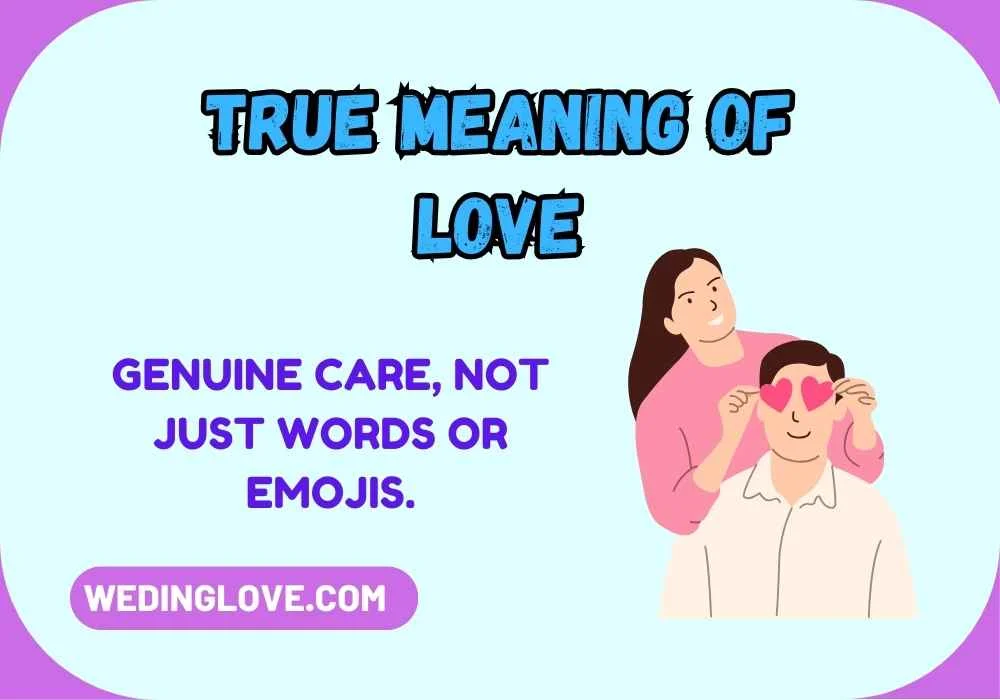
The true meaning of love = genuine care, not just words or emojis.
How to Use “True Meaning of Love”
When to Use / Avoid
- ✅ Use when: You want to show sincerity, appreciation, or deep care
- ❌ Avoid when: Making jokes about crushes in groups or trolling online
Tone & Intent
The phrase is versatile:
- Serious: Expressing genuine emotion
- Playful: Highlighting something adorable or heartwarming
- Friendly: Sharing appreciation with friends
Contexts: Texting, Social Media, Discord, Gaming, Forums
- Texting: “Seeing you happy is the true meaning of love ❤️”
- Social media captions: “My cat’s little antics = the true meaning of love 🐾”
- Discord/Gaming: “When the squad carries me to victory, that’s the true meaning of love 😂”
- Forums: Used to express deep appreciation or joy in a community setting
Real Life Examples
Text Chats
- Correct: “Thanks for helping me out today. You’re the true meaning of love!”
- Incorrect: “Ugh, true meaning of love lol” (sounds sarcastic if not intended)
Social Captions
- “Puppies in blankets are the true meaning of love 🐶❤️”
- “Homemade cookies + family movie night = true meaning of love”
Funny/Relatable Scenarios
- Watching someone eat fries without sharing: “Not the true meaning of love 😂”
- Friend sending memes consistently: “This is literally the true meaning of love”
Common Mistakes & Misunderstandings
- Using it sarcastically without context
- Overusing in casual conversations, diluting impact
- Confusing it with romantic obsession
- Ignoring emojis that alter meaning (❤️, 🫶, 😂)
- Mixing it up with similar slang without knowing nuances
Related Slang & Variations
- Love it: Less serious, expresses enjoyment
- True love: Can refer specifically to romantic relationships
- Heartfelt: Similar in meaning, more formal
- Platonic love: Non-romantic deep care
Platform-Specific Usage
- TikTok: Often used in viral memes for humor + emotion
- X (formerly Twitter): Thread highlights, reaction posts
- Discord/Gaming: Friendly praise or acknowledgment among friends
- Instagram / Reels: Captioning heartfelt moments
Freshness (2026 Trends)
- The phrase is trending in AI-generated memes and short-form TikTok content.
- Emojis now accompany text to convey tone automatically.
- Online communities use it to balance humor and sincerity, showing emotional intelligence in digital spaces.
FAQs
1. Is “true meaning of love” only romantic?
No, it applies to friends, pets, experiences, and acts of kindness too.
2. Can I use it jokingly?
Yes, as long as context makes your intent clear.
3. Does emoji choice matter?
Absolutely—❤️ feels romantic, 😂 adds humor, 🫶 shows platonic love.
4. Can it go viral in memes?
Yes, especially paired with relatable images or videos.
5. Is it formal enough for professional messaging?
Not really—keep it casual and friendly.
6. Can I use it in gaming communities?
Definitely, often to show appreciation or camaraderie.
7. How often should I use it in text?
Sparingly. Overuse reduces authenticity.
8. Is there a gender bias in using it?
No, anyone can use it, across all genders and identities.
9. Can brands use it?
Yes, for campaigns highlighting emotional connection with customers.
10. Has its meaning changed recently?
Yes, the digital era adds humor, sarcasm, and relatability while keeping sincerity intact.
Conclusion
The true meaning of love in 2026 is versatile, sincere, and trend-aware.
Whether you’re texting a friend, posting a meme, or sharing a heartfelt moment, knowing its modern nuances makes your online interactions more meaningful.
Genuine care + context = correct usage. Avoid sarcasm, overuse, or misinterpretation.
💬 Comment your favorite slang! How do you use the true meaning of love in your chats?

Smith is a passionate relationship writer at wedinglove.com, sharing heartfelt ideas, anniversary inspirations, and love-filled moments. With a deep belief in lifelong bonds, Smith helps couples celebrate every milestone with meaning, emotion, and timeless romance.