Being in love meaning goes far beyond simple attraction—it reflects a deep emotional connection, genuine care, and a sense of emotional intimacy that transforms how you see someone.
It’s that powerful feeling where affection, trust, and attachment grow naturally, creating a bond that feels both exciting and comforting. People often confuse love with infatuation, but true love involves commitment, understanding, and emotional security over time.
From butterflies in your stomach to a lasting sense of peace, being in love shapes your thoughts, actions, and even your priorities. Understanding this concept helps you recognize real love vs temporary feelings, making your relationships stronger and more meaningful.
Whether you’re experiencing it now or questioning your emotions, knowing the true meaning of love can bring clarity, confidence, and deeper connection.
Why This Slang Matters
The phrase being in love meaning is searched more than ever because people want clarity. Relationships today are influenced by:
- Social media expectations
- Fast communication (texts, DMs, snaps)
- Emotional confusion between liking and loving
Knowing the real meaning helps you:
- Avoid toxic or one-sided relationships
- Understand your feelings better
- Communicate clearly with your partner
Why People Misunderstand It
Many people mix up love with other emotions. Here’s why:
- Infatuation feels intense but fades quickly
- Attention can feel like love but lacks depth
- Physical attraction is often mistaken for emotional connection
- Online interactions create false intimacy
This confusion leads to heartbreak, mixed signals, and emotional stress.
What Does “Being in Love” Mean?
Simple Definition
Being in love means having a deep emotional connection with someone, where you genuinely care about their happiness, well-being, and presence in your life.
It’s not just about feelings—it’s about consistency, trust, and emotional attachment.
Origin + Evolution
The idea of “being in love” has existed for centuries, but its meaning has evolved:
- Past: Focused on commitment, loyalty, and long-term bonding
- Early 2000s: Romantic gestures and emotional expression
- Now (2026): Emotional intelligence, communication, and mutual respect
Today, love includes:
- Mental support
- Honest communication
- Digital connection (texts, calls, memes)
TL;DR
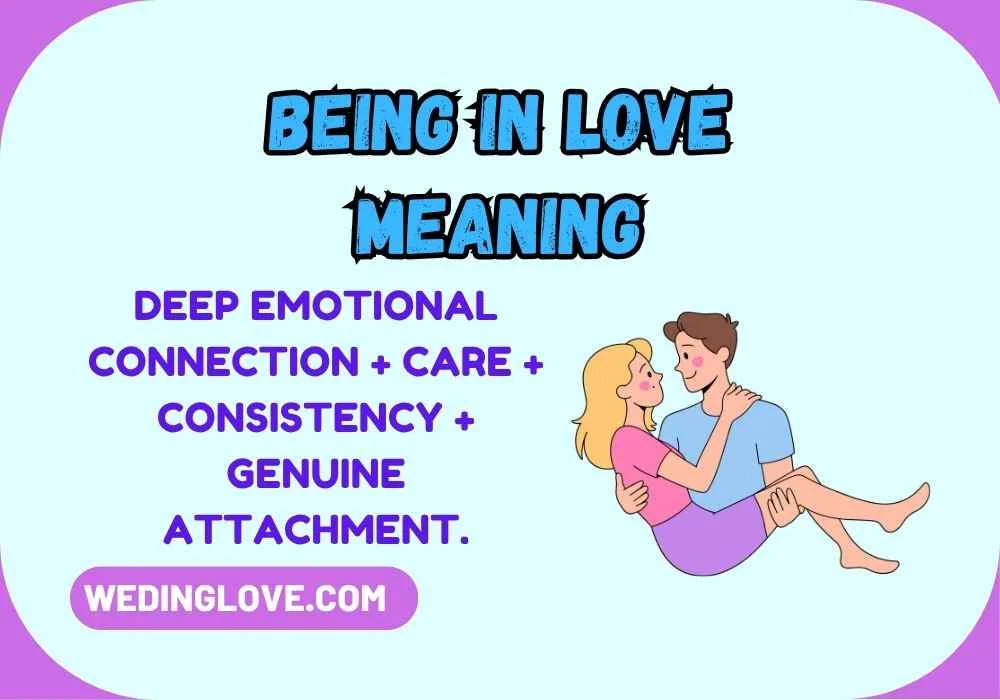
Being in love = deep emotional connection + care + consistency + genuine attachment.
How to Use “Being in Love”
When to Use It
Use this phrase when:
- You feel emotionally connected, not just attracted
- You care about someone’s happiness
- You think about them often in a meaningful way
- You want a deeper relationship
When to Avoid It
Avoid using it when:
- You just met someone
- It’s only physical attraction
- You’re unsure about your feelings
- You’re saying it just to impress
Tone & Intent
The phrase carries a serious and emotional tone. It should be used:
- Honestly
- Genuinely
- With emotional clarity
Not casually or as a joke (unless in a funny context).
Contexts Where It’s Used
Texting:
- “I think I’m really in love with you.”
- “This feels more than just liking… it’s being in love.”
Social Media:
- “When you realize being in love is peace, not stress ❤️”
- “Being in love hits different when it’s real.”
Discord / Gaming:
- “Bro disappeared… man’s in love 😂”
- “He’s not grinding anymore, he’s in love lol”
Forums:
- “How do you know if you’re being in love or just attached?”
Real-Life Examples
Text Chat Example
Person A: I miss you even when we just talked
Person B: That sounds like being in love 😊
Social Caption Example
- “Being in love is not butterflies, it’s comfort.”
- “Real love = peace, not confusion.”
Funny / Relatable Scenario
- You check your phone every 2 minutes → You might be in love
- You smile randomly thinking about them → Definitely in love
- You reread old chats → 100% in love 😂
Correct vs Incorrect Usage
✅ Correct:
- “I feel safe and happy… I think I’m in love.”
- “Being in love changed how I see everything.”
❌ Incorrect:
- “I saw her once, I’m in love.”
- “He liked my post, I’m in love.”
Common Mistakes & Misunderstandings
- Thinking love = constant excitement
- Confusing love with obsession
- Believing love should be perfect
- Assuming quick feelings are real love
- Ignoring emotional compatibility
Truth: Real love is calm, stable, and consistent—not chaotic.
Related Slang & Variations
Similar Terms
- Crushing – Short-term attraction
- Catching feelings – Starting to feel emotionally attached
- Falling for someone – Early stage of love
- Head over heels – Deep, intense love
Platform-Specific Usage
TikTok:
- “POV: You finally understand being in love”
X (Twitter):
- “Being in love should feel safe, not stressful.”
Memes:
-
“Me: I won’t fall in love
Also me: falls in love in 2 days 😂”
Freshness (2026 Trends)
In 2026, love is being redefined by:
- Soft love trend: Peaceful, drama-free relationships
- Emotional availability: Being open and honest
- Digital intimacy: Sharing memes, reels, and voice notes
- Healthy boundaries: Love without losing yourself
Modern love is less about drama and more about peace, respect, and emotional safety.
FAQs
1. What is the true meaning of being in love?
It means having a deep emotional connection and caring about someone beyond attraction.
2. How do I know if I’m in love or just attracted?
Love includes emotional attachment, while attraction is mostly physical.
3. Can you be in love online?
Yes, but real love requires trust, communication, and consistency.
4. How long does it take to be in love?
It varies. Some feel it quickly, others take time to develop deep feelings.
5. Is being in love permanent?
Not always. It can grow, fade, or change based on effort and connection.
6. Can you love two people at once?
It’s possible, but it often leads to confusion and emotional conflict.
7. Why does being in love feel overwhelming?
Because it involves strong emotions, attachment, and vulnerability.
8. Is love the same as attachment?
No. Love is deeper and healthier, while attachment can be dependent.
9. Can being in love hurt?
Yes, especially if it’s one-sided or lacks communication.
10. What makes love real in 2026?
Honesty, emotional safety, respect, and consistent effort.
Conclusion
Being in love meaning goes far beyond simple attraction—it’s about deep emotional connection, trust, and genuine care.
In today’s world, where feelings can be confusing, understanding real love helps you build meaningful relationships and avoid emotional mistakes.
Love should feel safe, calm, and real—not stressful or confusing.
💬 Comment your favorite slang!

Smith is a passionate relationship writer at wedinglove.com, sharing heartfelt ideas, anniversary inspirations, and love-filled moments. With a deep belief in lifelong bonds, Smith helps couples celebrate every milestone with meaning, emotion, and timeless romance.