crush meaning in love often feels like a sweet rush of emotions — the butterflies, constant thoughts, and quiet excitement that make someone stand out in your heart.
Understanding this feeling goes beyond simple attraction; it reflects emotional curiosity, romantic interest, and the early spark of connection that many people experience at some point.
Whether you’re wondering if it’s just admiration or the beginning of something deeper, exploring the psychology behind a crush can help you recognize signs of affection, infatuation, and emotional bonding.
From daydreaming about someone to noticing subtle changes in your behavior, this topic reveals why crushes feel so powerful and meaningful. Knowing the true meaning can bring clarity to your feelings and help you navigate relationships with confidence, self-awareness, and emotional insight.
Why the Slang Matters
Language shapes how we express emotions. Knowing what “crush” means helps you:
- Understand romantic hints in conversations
- Communicate feelings honestly
- Avoid misreading signals
- Connect better in dating or friendships
- Stay in tune with modern relationship talk
In digital spaces, a single word can carry emotional weight. When someone says they have a crush, it often signals vulnerability and interest.
Why People Misunderstand It
Many people confuse a crush with love, infatuation, or simple attraction. Here’s why misunderstandings happen:
- Social media exaggerates romantic feelings
- Movies portray crushes as instant love
- People use the term casually or jokingly
- Cultural differences change interpretations
- Fear of rejection makes signals unclear
Understanding the nuance helps you respond thoughtfully instead of jumping to conclusions.
What Does “Crush Meaning in Love” Mean?
Simple Definition
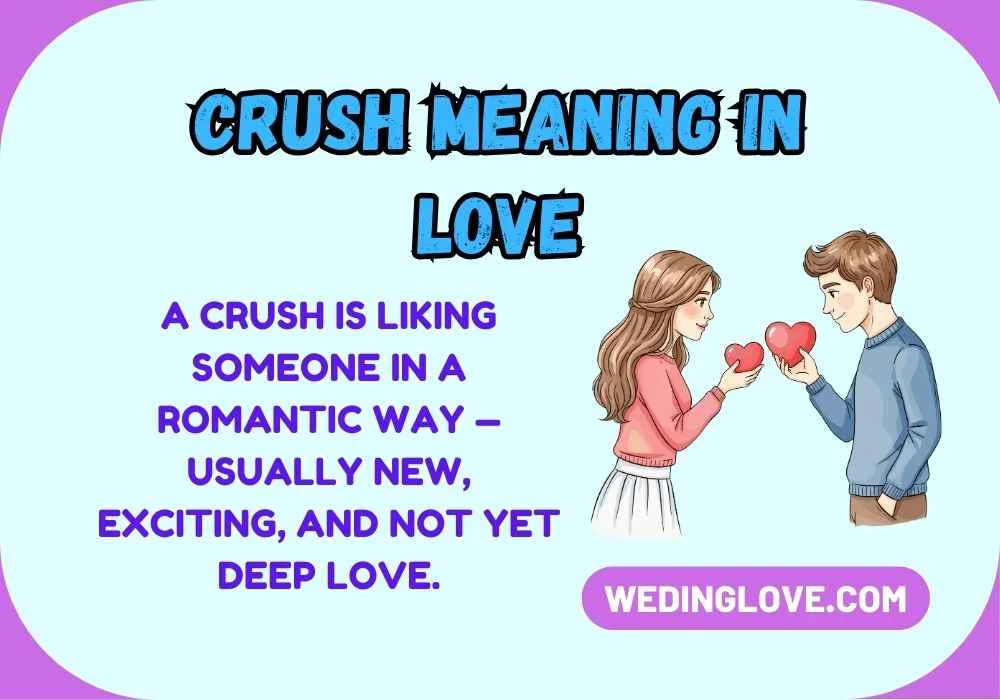
A crush is a strong feeling of romantic or emotional attraction toward someone, often mixed with excitement, curiosity, and nervousness — usually in the early stages of liking someone.
Origin + Evolution
The term “crush” has been used since the late 1800s to describe intense admiration. Over time, it shifted from formal language to everyday slang, especially among younger generations.
In the texting era, “crush” became a quick way to express interest without declaring serious love. Today, it can apply to romantic partners, celebrities, or even people admired online.
Short TL;DR
A crush is liking someone in a romantic way — usually new, exciting, and not yet deep love.
How to Use “Crush Meaning in Love”
When to Use
Use the term when:
- You feel attracted but not deeply committed
- Talking about early romantic interest
- Sharing feelings with friends
- Describing admiration or butterflies
When to Avoid
Avoid using it when:
- The relationship is serious or long-term
- Discussing committed love
- You’re unsure of the other person’s boundaries
Tone & Intent
The tone is usually light, hopeful, and playful. It can also be shy or heartfelt depending on context.
Contexts
Texting:
“ I think I have a crush on my classmate.”
Social media:
Posting hints, emojis, or subtle captions about someone you like.
Discord or gaming chats:
Lighthearted conversations about someone admired in the community.
Forums:
Advice discussions about feelings or dating situations.
Real Life Examples
Text Chats
- “Why do I smile every time my crush texts?”
- “My crush just liked my post — is that a sign?”
Social Captions
- “When your crush notices you 😌”
- “Trying to act normal around my crush.”
Funny / Relatable Scenarios
- Forgetting what you were saying when they walk in
- Replaying conversations in your head
- Checking your phone hoping they message
Correct vs Incorrect Usage
✅ Correct: “I have a crush on someone at work.”
❌ Incorrect: “My crush of 10 years is my spouse.” (That’s long-term love, not a crush.)
Common Mistakes & Misunderstandings
- Thinking a crush guarantees mutual feelings
- Confusing physical attraction with emotional interest
- Assuming it must lead to a relationship
- Overanalyzing small interactions
- Ignoring personal boundaries
Remember: a crush is about feelings, not expectations.
Related Slang & Variations
Similar Terms
- Infatuation — intense but short-lived attraction
- Puppy love — innocent early romance
- Admire — respectful liking without romance
- Romantic interest — broader term
Platform-Specific Usage
- Short videos often dramatize “crush moments”
- Messaging apps use emojis to hint at a crush
- Online communities discuss “crush stories”
Freshness (2026 Trends)
In 2026, the idea of a crush is influenced by digital culture:
- People talk openly about emotional vulnerability
- Soft launches (subtle hints about someone) are popular
- Memes about “delulu crush energy” trend widely
- Online friendships turning into crushes are common
- Voice notes and reactions reveal subtle interest
Modern conversations treat crushes as part of emotional self-awareness rather than just teenage experiences.
FAQs
1. What is the difference between a crush and love?
A crush is early attraction; love is deeper emotional commitment.
2. Can adults have crushes?
Yes — people of any age can experience a crush.
3. How long does a crush usually last?
It can last weeks, months, or longer depending on interaction.
4. Is having a crush normal?
Absolutely — it’s a natural part of emotional development.
5. Does a crush mean you want a relationship?
Not always; sometimes it’s simple admiration.
6. Can you have multiple crushes?
Yes, especially when feelings are exploratory.
7. How do you know if someone is your crush?
You feel excited, curious, and think about them often.
8. Is a crush just physical attraction?
Usually it includes emotional interest too.
9. Should you tell your crush how you feel?
It depends on comfort and timing — honesty helps clarity.
10. Can a crush turn into love?
Yes — many relationships start with a crush.
Conclusion
The phrase crush meaning in love describes the spark of romantic interest — that mix of excitement, admiration, and curiosity when you like someone. Understanding it helps you navigate feelings, communicate better, and recognize emotional signals in modern conversations.
Crushes are normal, meaningful, and sometimes the beginning of deeper connections. By knowing the context, tone, and common misunderstandings, you can approach relationships with confidence and clarity.
Comment your favorite slang!