Ethos logos pathos meaning refers to the three powerful modes of persuasion that shape how messages influence thoughts, emotions, and decisions.
Rooted in Aristotle’s rhetoric, these concepts explain why certain arguments feel trustworthy, emotionally compelling, or logically convincing. Ethos focuses on credibility and authority, helping audiences trust the speaker or writer. Logos relies on logic, facts, and clear reasoning, appealing to the rational mind through evidence, data, and structured arguments. Pathos targets emotions and human experience, creating emotional connections that inspire action or empathy.
Understanding the ethos logos pathos meaning is essential in communication marketing, education, and public speaking, where persuasive language shapes opinions and outcomes. Whether analyzing speeches, crafting content, or improving writing skills, these rhetorical appeals help readers recognize how persuasion works, why messages succeed, and how effective arguments balance trust, logic, and emotion to influence audiences naturally and ethically.
Why This Concept Matters Today
Ethos, logos, and pathos matter because they explain how people influence others.
You see them when:
- A creator says “Trust me, I’ve done this for 10 years”
- A post drops statistics to prove a point
- A video makes you feel angry, inspired, or emotional
Knowing ethos logos pathos meaning helps you:
- Spot manipulation
- Strengthen your arguments
- Write better captions, essays, and messages
- Win debates without shouting
Why People Often Misunderstand It
Most people think:
- Ethos = ethics only ❌
- Logos = logo or branding ❌
- Pathos = sympathy only ❌
In reality, these are persuasion tools, not moral rules. They work together and appear everywhere online, not just in classrooms.
What Does “Ethos Logos Pathos” Mean?
Simple Definition
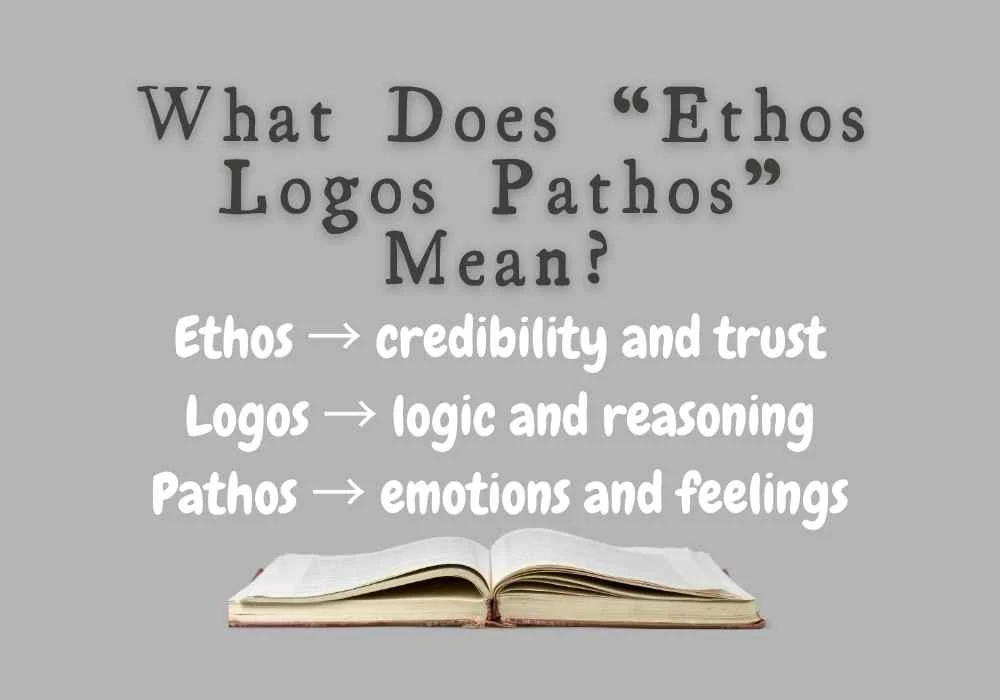
Ethos, logos, and pathos are three ways to persuade an audience:
- Ethos → credibility and trust
- Logos → logic and reasoning
- Pathos → emotions and feelings
Detailed Breakdown
Ethos (Trust & Credibility)
Ethos means convincing people by showing you are trustworthy or experienced.
Examples:
- “I’m a certified trainer.”
- “As a doctor, I’ve seen this firsthand.”
- “I’ve been gaming competitively for 12 years.”
Ethos answers:
👉 Why should I believe you?
Logos (Logic & Facts)
Logos uses facts, data, comparisons, or reasoning.
Examples:
- Statistics
- Step-by-step explanations
- Cause-and-effect logic
Logos answers:
👉 Does this make sense?
Pathos (Emotion & Feelings)
Pathos persuades by triggering emotions.
Examples:
- Fear
- Hope
- Anger
- Humor
- Nostalgia
Pathos answers:
👉 How does this make me feel?
Short TL;DR
Ethos = trust
Logos = logic
Pathos = emotion
How to Use Ethos Logos Pathos
When to Use Them
Use them when you want to:
- Convince someone
- Defend an opinion
- Sell an idea
- Write persuasively
- Influence decisions
When to Avoid Overusing Them
- Too much ethos → sounds arrogant
- Too much logos → boring or cold
- Too much pathos → manipulative
The best communication uses all three together.
Tone & Intent
- Ethos feels confident and credible
- Logos feels calm and reasonable
- Pathos feels emotional and human
Where You See Them Online
Texting & Messaging
- “Trust me, I’ve tried it.” (Ethos)
- “It costs less and works faster.” (Logos)
- “You’ll regret not doing this.” (Pathos)
Social Media
- Influencers showing credentials → Ethos
- Threads explaining facts → Logos
- Viral emotional stories → Pathos
Discord & Gaming Chats
- “I’ve played since beta.” → Ethos
- “This strategy gives higher DPS.” → Logos
- “This patch ruined everything.” → Pathos
Forums & Online Debates
- Personal experience → Ethos
- Evidence and links → Logos
- Rage posts or sympathy → Pathos
Real Life Examples
Text Chat Example
Correct:
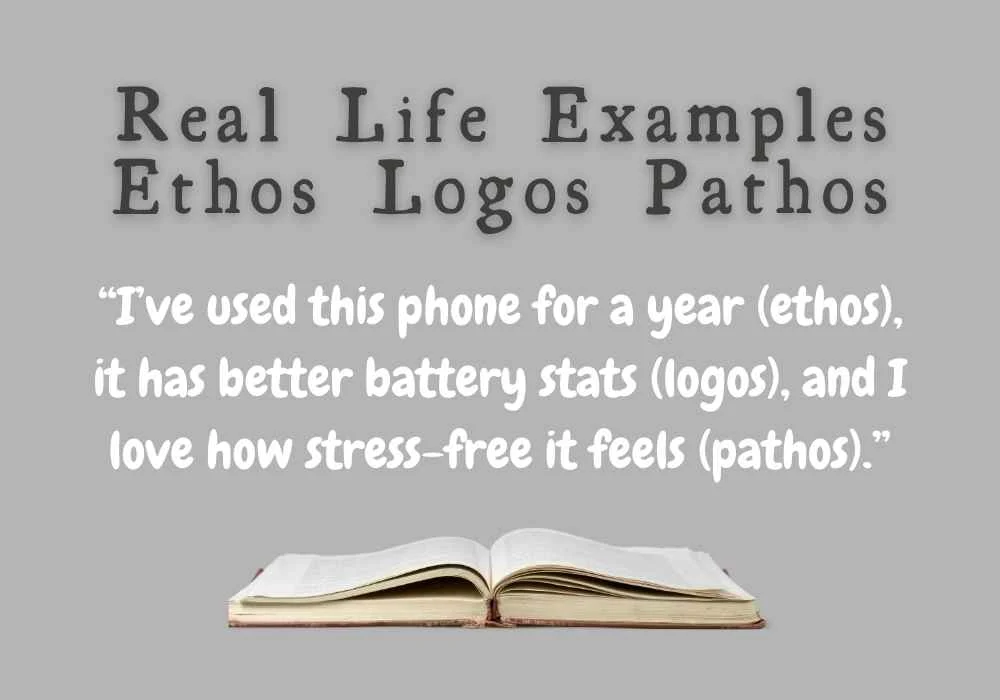
“I’ve used this phone for a year (ethos), it has better battery stats (logos), and I love how stress-free it feels (pathos).”
Incorrect:
“Buy this phone because everyone else is dumb.”
Social Caption Example
“After 10 years of teaching (ethos), I’ve seen students improve faster with this method (logos). Watching their confidence grow never gets old (pathos).”
Funny & Relatable Scenario
A friend says:
- “Trust me bro” → Ethos
- “It mathematically works” → Logos
- “You’ll cry if you don’t” → Pathos
All three in one sentence.
Correct vs Incorrect Usage
Correct Usage
- Balanced persuasion
- Clear intent
- Matches the audience
Incorrect Usage
- Fake credibility
- Misused statistics
- Forced emotional pressure
Common Mistakes & Misunderstandings
- Confusing logos with brand logos
- Thinking pathos means weakness
- Believing ethos only applies to professionals
- Using only one method and ignoring others
Related Slang & Variations
Similar Concepts
- “Trust factor” → Ethos
- “Receipts” → Logos
- “Emotional appeal” → Pathos
Platform-Specific Usage
- TikTok: Pathos-heavy storytelling
- X (Twitter): Logos through threads
- Reddit: Logos + Ethos dominance
- Instagram: Ethos via lifestyle proof
Freshness: 2026 Trends
In 2026:
- Short-form videos rely heavily on pathos
- AI-written content is judged by ethos
- Fact-checking boosts logos
- Audiences value authentic trust more than ever
People can instantly sense fake persuasion—and call it out fast.
FAQs About Ethos Logos Pathos Meaning
1. Is ethos logos pathos still relevant today?
Yes, it’s more relevant now than ever.
2. Can one sentence use all three?
Absolutely, and the best ones do.
3. Is this only for speeches?
No, it applies to texting, posts, ads, and chats.
4. Which one is most powerful?
Pathos grabs attention, but balance wins.
5. Is logos always facts?
Mostly, but it also includes reasoning.
6. Can emotions be logical?
They can support logic, but they’re different tools.
7. Do influencers use ethos?
Yes—credibility is their main asset.
8. Is using pathos manipulation?
Only if it’s dishonest or exaggerated.
9. Can beginners use these techniques?
Yes, they’re simple once understood.
10. Why is ethos important online?
Because trust determines engagement and belief.
Conclusion
Understanding ethos logos pathos meaning gives you a powerful lens to decode persuasion everywhere—online and offline.
Whether you’re scrolling, debating, posting, or writing, these three tools shape how ideas spread and influence minds.
Once you recognize them, you’ll never see communication the same way again.
👉 Comment your favorite slang!

Joe Root is a passionate relationship writer at wedinglove.com, where he turns real emotions into heartfelt words. With a deep love for weddings, anniversaries, and lifelong bonds, he creates content that helps couples celebrate love in its purest form. His writing is inspired by real stories, genuine connections, and the beauty of lasting relationships.