I love you too meaning goes far beyond just a simple reply in a conversation—it carries a powerful emotional message that can deepen bonds and express mutual affection.
Understanding this phrase helps reveal the subtle nuances of love, care, and connection in modern communication.
Whether whispered in a quiet moment, typed in a heartfelt text, or shared during a meaningful conversation, its significance reflects genuine feelings and emotional reciprocity.
Many people often wonder if it’s just a casual response or a true declaration of affection, and knowing its context can transform ordinary exchanges into moments of intimate understanding.
Why This Slang Matters
Even simple expressions like “I love you too” carry emotional weight online. Misreading it can lead to confusion or even hurt feelings. Chat abbreviations and short responses matter because they reflect tone, intention, and emotional nuance—something that can easily get lost in text.
For example, replying “I love you too” with enthusiasm, sarcasm, or hesitation can send very different signals. Understanding this helps you communicate more effectively in texting, DMs, or forums, and keeps your relationships strong—digital or real-life.
Why People Misunderstand It
Many misunderstand “I love you too” because context is key. Some common pitfalls include:
- Tone ambiguity: Text lacks voice cues.
- Timing mismatch: Sending it too quickly or late can change the message’s meaning.
- Platform expectations: A Discord chat might expect humor, while a text to a partner requires sincerity.
In short, i love you too meaning isn’t always literal—it’s shaped by where, when, and how you say it.
What Does “i Love You Too” Mean?
Simple Definition
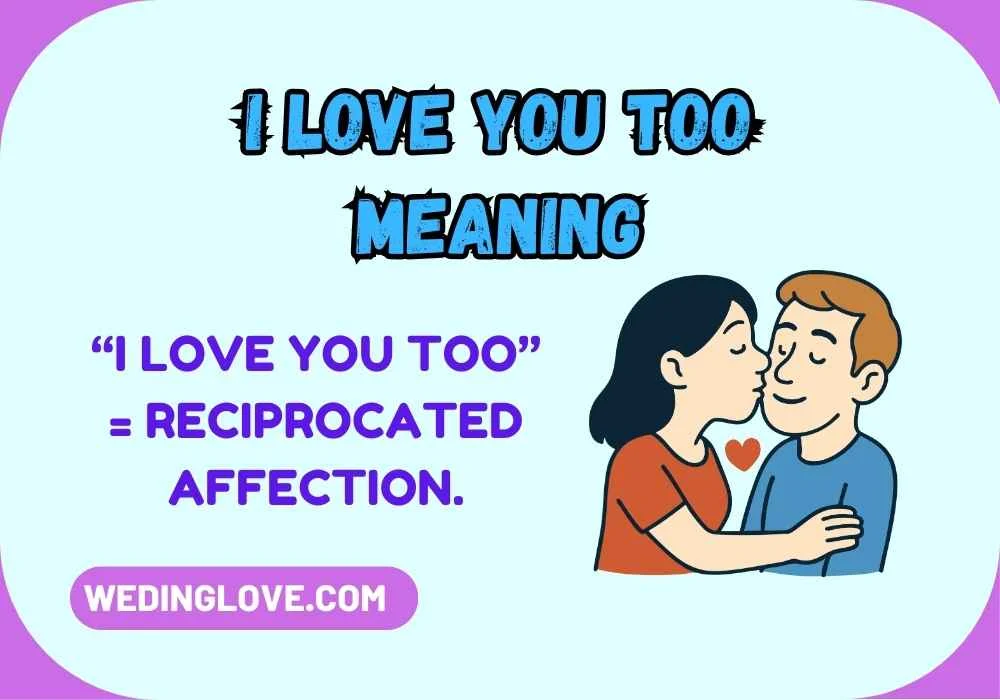
“I love you too” is a response that communicates reciprocated affection. Essentially, it’s saying:
“I feel the same way about you as you feel about me.”
It’s often used in personal conversations but has migrated to casual digital contexts like memes, gaming chats, and social media captions.
Origin & Evolution
The phrase originates from traditional spoken language and letters. As texting became mainstream in the 2000s, it shortened to “ily2” or simply typed as “I love you too” in chats. In 2026, it now exists as:
- Full text: I love you too
- Abbreviated: ily2 or ilu2
- Emoji-infused: ❤️❤️ or 💖2u
It has evolved from a heartfelt confession to a versatile digital response, sometimes playful, sometimes serious.
Short TL;DR
TL;DR: “I love you too” = reciprocated affection. Its meaning depends on tone, platform, and context.
How to Use “i Love You Too”
When to Use / Avoid
- ✅ Use when someone expresses love or deep care.
- ✅ Use in romantic, friendship, or family chats.
- ❌ Avoid using casually in professional chats or with strangers—it can be misread.
Tone & Intent
- Sincere: Genuine reciprocation.
- Playful: Memes, jokes, or teasing.
- Sarcastic: Can indicate disinterest or irony—use carefully.
Contexts
- Texting: Personal messages to friends, family, or partners.
- Social media: Replying to heartfelt posts or affectionate comments.
- Discord & Gaming: Lighthearted, humorous, or meme-based responses.
- Forums: Acknowledge someone’s supportive comment in a casual way.
Real Life Examples
Text Chats
Correct:
- Friend: I love you!
- You: I love you too!
Incorrect:
- Friend: I love you!
- You: k
Social Captions
- Posting a photo with your pet: I love you too, buddy ❤️
- Celebrating a best friend: Thanks for always being there! I love you too 💖
Funny / Relatable Scenarios
- Friend texts: I love you too much, stop it!
- You reply jokingly: I love you too… but not as much as pizza 😎🍕
Correct vs Incorrect Usage
- ✅ Correct: Matching the tone of the sender.
- ❌ Incorrect: Using it sarcastically when the sentiment is serious.
Common Mistakes & Misunderstandings
- Overusing abbreviations: ily2 might seem lazy or insincere.
- Ignoring context: Using it in professional spaces or with strangers.
- Misreading tone: Sarcasm or humor can be confusing without emojis.
- Late responses: Delayed replies can make the sentiment seem forced or awkward.
Related Slang & Variations
- ily = I love you
- luv u 2 = Casual variation
- <3 2u = Emoji-heavy reply
- ilysm = I love you so much (can be reciprocated as ilysm too)
Platform-Specific Usage
- TikTok & Reels: Used in duet or comment replies.
- X (Twitter): Casual reply or meme caption.
- Discord: Playful response in chat channels or DMs.
- Instagram: Emojis, reactions, or story replies.
Freshness: 2026 Trends
Digital slang evolves constantly. In 2026, i love you too is trending as:
- Paired with AI chatbots that interpret tone.
- Emoji-first communication: 💖2u or ❤️2u.
- Meme culture: Used in gaming and fandom humor.
- Voice-to-text replies maintaining casual authenticity.
Platforms like TikTok and Discord emphasize playful or ironic uses, while private texts keep it sincere.
FAQs
-
Q: Is “i love you too” only for romantic relationships?
A: No, it works for friends, family, and even pets. -
Q: Can I use abbreviations like ily2?
A: Yes, but context matters—use casual chats or playful memes. -
Q: Does tone affect the meaning?
A: Absolutely. Emojis, timing, and wording shape interpretation. -
Q: Can it be sarcastic?
A: Yes, but only in informal contexts where sarcasm is understood. -
Q: Is it okay on social media comments?
A: Perfect for friendly, fun, or meme-style replies. -
Q: Should I reply immediately?
A: Prompt replies feel more sincere, but timing depends on context. -
Q: Can I combine it with emojis?
A: Yes, emojis enhance tone and clarity. -
Q: Is it outdated?
A: No, it’s still widely used but more playful or meme-driven in 2026. -
Q: Can it be misinterpreted?
A: Yes, always consider tone, platform, and relationship. -
Q: Are there platform-specific alternatives?
A: Yes, Discord and gaming chats often use playful forms like ilysm2 or ❤️2u.
Conclusion
Understanding i love you too meaning helps you communicate clearly, avoid misunderstandings, and engage authentically online. From heartfelt texts to meme-filled social media posts, using it correctly strengthens connections and keeps your messages on point.
Quick Summary:
- Definition: Reciprocated affection
- Context Matters: Tone, platform, timing
- Variations: ily2, ❤️2u, ilysm too
- Mistakes: Misreading tone, using in wrong context
💬 Comment your favorite slang! How do you usually reply with i love you too in chats or social posts?

Joe Root is a passionate relationship writer at wedinglove.com, where he turns real emotions into heartfelt words. With a deep love for weddings, anniversaries, and lifelong bonds, he creates content that helps couples celebrate love in its purest form. His writing is inspired by real stories, genuine connections, and the beauty of lasting relationships.