Love your neighbour as yourself meaning is more than a biblical phrase — it is a powerful moral principle that shapes relationships, communities, and personal character.
Rooted in Christian teachings and found in the Bible verse (Mark 12:31), this commandment highlights the importance of compassion, empathy, kindness, and selflessness in everyday life.
But what does it truly mean in modern times? Is it about tolerance, forgiveness, or unconditional love? Understanding this phrase helps strengthen faith, spiritual growth, and human connection while guiding ethical behavior in families, friendships, and society.
Why This Phrase Matters
Understanding “love your neighbour as yourself” is more than just being polite. It:
- Builds empathy in online communities.
- Prevents misunderstandings in chats and social interactions.
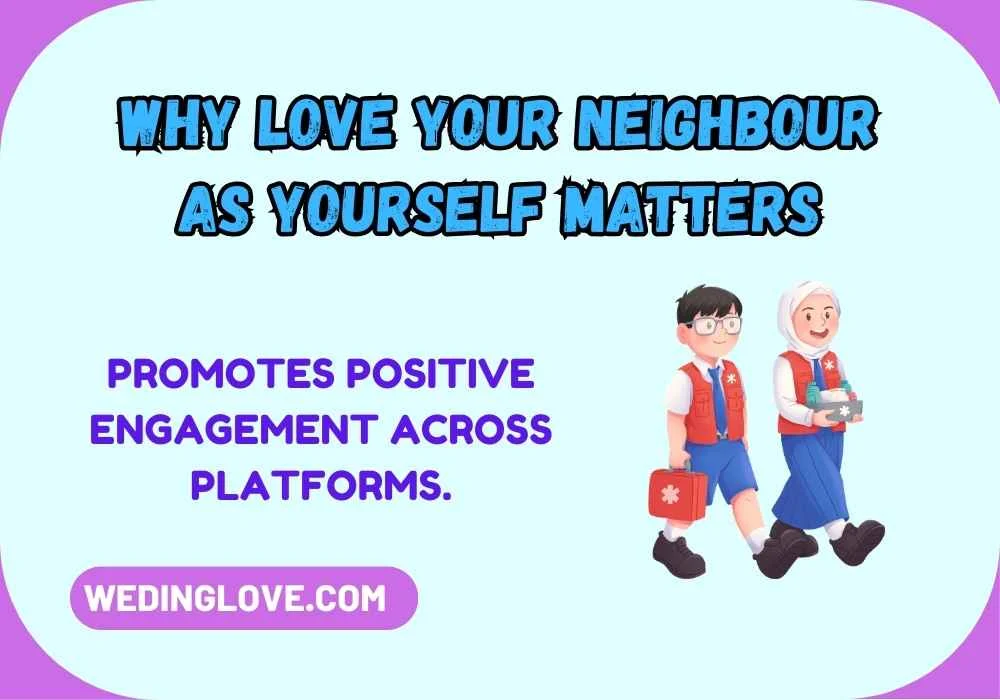
- Promotes positive engagement across platforms.
- Helps you stand out as thoughtful in fast-paced conversations.
In today’s digital era, where tone and intent are often lost, knowing this phrase’s full meaning can save friendships, prevent conflict, and even boost your social media credibility.
Why People Misunderstand It
Many misunderstand this phrase because:
- Literal vs. contextual reading: People take it literally, ignoring cultural or situational nuances.
- Platform-specific lingo: In gaming or Discord, it may be shortened, joked about, or used ironically.
- Generational gaps: Younger users might treat it as a meme, while older users see it as a moral guideline.
- Translation issues: Non-native speakers may misinterpret the phrase in global chats.
What Does “Love Your Neighbour As Yourself” Mean?
Simple Definition
At its core, “love your neighbour as yourself” means treating others with the same respect, kindness, and care that you give to yourself. In digital terms, it’s about being considerate, empathetic, and fair in your messages, posts, and interactions.
Origin + Evolution
- Origin: The phrase originates from religious and philosophical teachings, including the Bible, where it emphasizes empathy and moral conduct.
- Evolution: Over time, it has been adapted into modern language as advice for digital communication and social behavior. In 2026, it’s used both seriously and humorously, often appearing in memes, captions, and chat abbreviations.
TL;DR
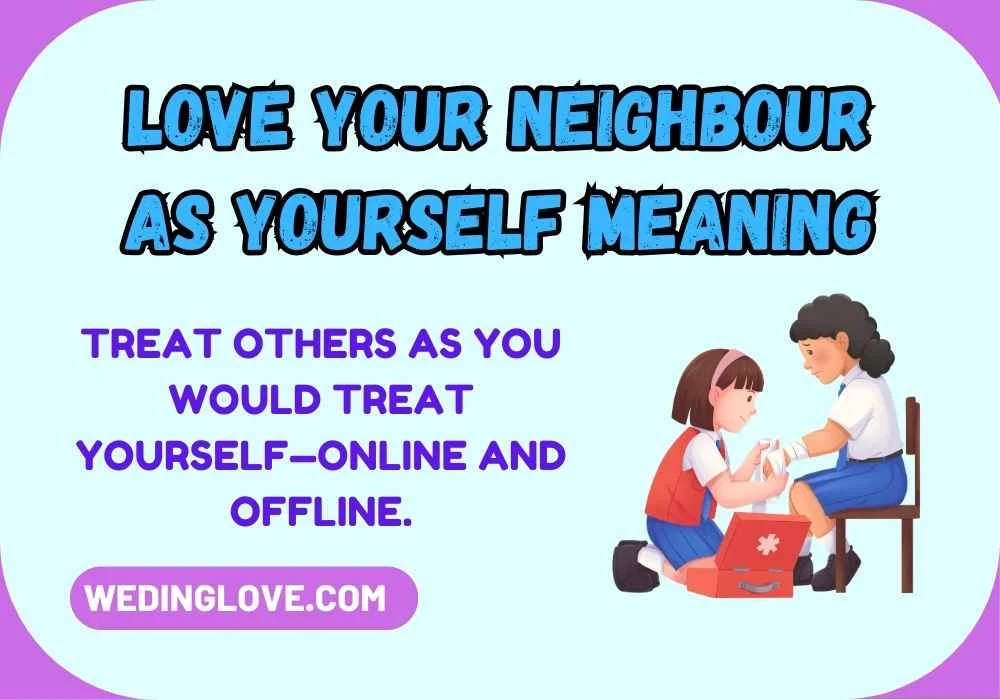
Treat others as you would treat yourself—online and offline.
How to Use “Love Your Neighbour As Yourself”
When to Use / Avoid
Use it when:
- Encouraging kindness in online communities.
- Responding to conflicts or heated discussions.
- Captioning posts promoting empathy or social responsibility.
Avoid it when:
- Sarcasm might confuse your audience.
- Tone requires casual brevity, like in fast-paced gaming chats.
- Misinterpreted as moral policing.
Tone & Intent
- Friendly, empathetic, encouraging.
- Can be playful or serious, depending on context.
- Never use it to guilt-trip someone online—it loses effectiveness.
Contexts
- Texting: Remind a friend to be considerate in a group chat.
- Social Media: Caption for a TikTok promoting kindness.
- Discord / Gaming: Light-hearted reminder during team discussions.
- Forums: Sign-off for advice posts or discussion threads.
Real Life Examples
Text Chats
-
Correct:
Friend: “I got mad at Sarah earlier 😅”
You: “Don’t worry, just love your neighbour as yourself, she didn’t mean it!” -
Incorrect:
“Love your neighbour as yourself LOL” (without context—can sound condescending)
Social Captions
-
Correct:
“Treat others with the same care you give yourself 🌟 #loveyourneighbourasyourself” -
Incorrect:
“Love your neighbour as yourself… I guess?” (weak or sarcastic tone)
Funny / Relatable Scenarios
- During a game: “Don’t steal my loot! Remember love your neighbour as yourself 😂”
- Replying to a troll: “Bro, love your neighbour as yourself… unless they keep trolling 😭”
Common Mistakes & Misunderstandings
- Using it sarcastically in sensitive contexts.
- Overloading a message with the phrase—makes it feel preachy.
- Ignoring cultural differences in digital communities.
- Confusing literal and figurative meanings.
Related Slang & Variations
- Treat others like yourself – simplified version.
- Empathy first – common on TikTok positivity trends.
- Mind your neighbour – playful shorthand in gaming circles.
Platform-specific usage:
- TikTok / Reels: Often used with emojis and hashtags.
- X / Threads: Quote-style, used in threads or memes.
- Discord / Forums: Shortened to “LYNA” in casual chats.
Freshness (2026 Trends)
- TikTok challenges encouraging kindness with the hashtag #LoveYourNeighbour.
- Memes: Incorporating gaming or AI jokes while promoting empathy.
- Chats: Abbreviations like LYNA becoming trendy in fast-paced messaging apps.
- AI tools: Smart chat moderators sometimes auto-suggest “love your neighbour as yourself” in community posts to encourage positive behavior.
FAQs
-
What does ‘love your neighbour as yourself’ mean in text?
Treat others with the same respect and care you’d give yourself. -
Can it be used jokingly?
Yes, but ensure tone matches context to avoid confusion. -
Is it only religious?
No, it’s now a general phrase for kindness and empathy. -
Abbreviations for texting?
Some use LYNA in casual messages or gaming chats. -
Can it be a meme?
Definitely! TikTok and Discord communities often turn it into playful content. -
Is it outdated?
No, it’s evolving with digital culture in 2026. -
Best platforms to use it?
TikTok, X, Instagram, Discord, gaming chats, forums. -
Can it prevent conflicts?
Yes, when applied sincerely, it promotes understanding. -
Is it for personal or public use?
Both—texting friends or posting captions online. -
Difference from similar phrases?
Variations like “treat others like yourself” are simpler but share the same intent.
Conclusion
Understanding “love your neighbour as yourself” in 2026 means more than quoting an old phrase—it’s about applying empathy, respect, and humor in modern digital spaces.
From texting friends to posting on TikTok, using it correctly can improve your interactions, reduce misunderstandings, and even make your online presence more positive.
Comment your favorite slang! Share how you use it in chats, memes, or social posts.

Joe Root is a passionate relationship writer at wedinglove.com, where he turns real emotions into heartfelt words. With a deep love for weddings, anniversaries, and lifelong bonds, he creates content that helps couples celebrate love in its purest form. His writing is inspired by real stories, genuine connections, and the beauty of lasting relationships.