Reciprocate meaning in love goes far beyond simply saying “I love you back.” In every relationship, understanding how to mutually express feelings is the cornerstone of a strong emotional connection.
Many people struggle with recognizing whether their partner truly values their affection, and learning the subtle signs of reciprocation can transform your bond. From emotional support, thoughtful gestures, to genuine communication, love thrives when both partners give and receive in harmony.
The psychology of love, attachment styles, and emotional reciprocity helps you identify when your feelings are truly returned, making relationships deeper and more fulfilling.
Whether it’s romance, friendship, or family ties, knowing the real meaning of reciprocation empowers you to build connections that are balanced, heartfelt, and lasting.
Why This Slang Matters
Understanding reciprocate meaning in love is not just about being romantic—it’s about emotional intelligence. People misinterpret messages all the time. Sending a heart emoji without understanding the other person’s intent could be seen as insincere. By knowing how to reciprocate, you demonstrate:
- Awareness: You acknowledge their feelings genuinely.
- Connection: Your responses feel meaningful, not robotic.
- Respect: You honor their vulnerability and trust.
Why People Misunderstand It
Even native English speakers sometimes misread this phrase online. Why?
- Assumptions vs. Intent: Texts lack tone, making it easy to misinterpret affection.
- Overusing abbreviations: “ILY” or heart emojis are common, but context matters.
- Cultural differences: What counts as “reciprocating” varies across cultures and platforms.
In short, reciprocate meaning in love is more than replying—it’s about matching the energy and intent of the other person authentically.
What Does “Reciprocate Meaning in Love” Mean?
Simple Definition
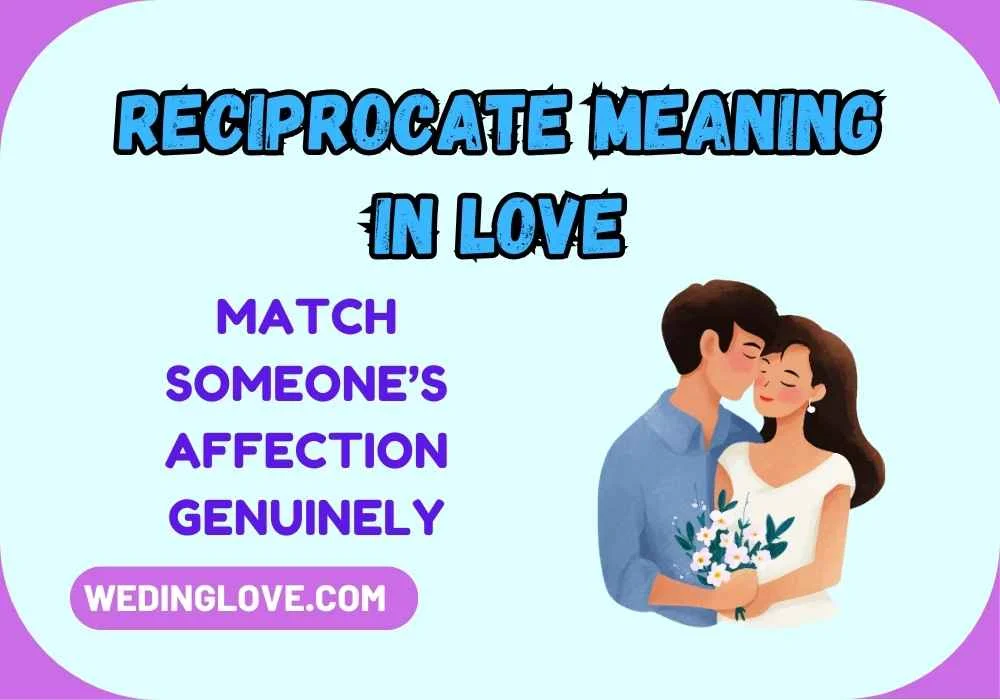
To reciprocate meaning in love means to respond to someone’s affection, emotional expression, or romantic gesture with equal or compatible sentiment.
In plain terms: if someone shows they care, you show you care back—verbally, emotionally, or through digital signals like texts, emojis, or gifts.
Origin + Evolution
The term “reciprocate” comes from Latin reciprocus, meaning “returning the same way.” Historically, it was used in literature and psychology to describe mutual feelings.
In digital culture, the phrase gained popularity in the late 2010s on platforms like Tumblr and Reddit, where young adults discussed dating, unrequited love, and online flirts. By 2026, the concept has shifted to chat etiquette, memes, and short-form social media communication.
Short TL;DR
Reciprocate meaning in love = match someone’s affection genuinely, whether in texts, social posts, or real-life gestures.
How to Use “Reciprocate Meaning in Love”
When to Use / Avoid
Use when:
- Someone expresses interest or care
- Responding to emojis, gifts, or messages
- Matching tone in romantic or friendly chats
Avoid when:
- The person is joking or being sarcastic
- You don’t feel the same way (honesty is key)
- The message is professional or unrelated to emotions
Tone & Intent
- Positive & heartfelt: ❤️, “I feel the same”
- Light & playful: 😏, “Right back at ya”
- Respectful & gentle: “Thanks, that means a lot”
Contexts: Texting, Social Media, Discord, Gaming, Forums
- Texting: “I had a great time with you today 😊” → Reply: “Me too! Loved every second ❤️”
- Social Media: Commenting on a post with “You’re amazing 😍” → Like + reply “You’re too kind 😘”
- Discord / Gaming: Friend sends “gg, you’re awesome!” → Respond with “Right back at ya!”
- Forums: Someone shares a personal story → Reply with empathy or shared experience
Real Life Examples
Text Chats
Correct:
- A: “I really like you ❤️”
- B: “I like you too! 🥰”
Incorrect:
- A: “I really like you ❤️”
- B: “K”
Social Captions
- Correct: “Feeling grateful for my partner 💖 #love” → Comment: “You deserve all the love! 💕”
- Incorrect: “Feeling grateful for my partner 💖 #love” → Comment: “Nice”
Funny / Relatable Scenarios
- When someone sends “I miss you” at 2 AM → You reply with “Same… now send snacks 🍕😂”
- Your crush sends a meme → You reply with a louder, funnier meme.
Correct vs Incorrect Usage
Correct: Mirrors the sentiment sincerely.
Incorrect: Dismisses or ignores feelings.
Common Mistakes & Misunderstandings
- Confusing politeness with reciprocation
- Overusing emojis without context
- Assuming reciprocation = romantic interest
- Delayed or inconsistent responses
Related Slang & Variations
- Mutual feelings – classic term
- Back at ya – casual way to reciprocate
- Hearting/liking – digital signal
- Recip emoji – playful shorthand on Discord/TikTok
Platform-Specific Usage
- TikTok: Comments, duet videos, reactions
- X (Twitter): Likes, quote tweets, witty replies
- Discord / Gaming: Emojis, in-game gestures, playful banter
Freshness: 2026 Trends
- Memes and threads about “ghosting vs reciprocating”
- TikTok videos analyzing “how to show love online”
- AI chatbots prompting users to practice reciprocating feelings
- Emojis + GIFs replacing long text explanations
- Increased awareness of emotional intelligence online
FAQs
-
What does reciprocate meaning in love mean in texting?
Replying with similar affection or sentiment to match the other person. -
Is reciprocation always romantic?
No, it can be platonic or friendly too. -
Can emojis be considered reciprocation?
Yes, if they genuinely convey similar feelings. -
What if I don’t feel the same?
Politely acknowledge without faking feelings. -
How soon should I reciprocate?
Ideally within the same conversation or day. -
Does reciprocation differ by culture?
Yes, some cultures favor verbal expressions, others digital signals. -
Can I reciprocate online only?
Digital reciprocation works, but in-person gestures strengthen bonds. -
What’s the difference between reciprocate and reply?
Reciprocate matches sentiment; reply can be neutral. -
Are memes effective for reciprocating?
Absolutely, when shared with the right tone. -
Is “reciprocate meaning in love” the same as flirting?
Not always; flirting is playful, reciprocation can be serious or friendly.
Conclusion
Understanding reciprocate meaning in love is essential in 2026 digital communication.
It’s about matching energy, acknowledging feelings, and connecting authentically across platforms.
Whether through texts, memes, or social posts, practicing this helps prevent misunderstandings and strengthens relationships.
💬 Comment your favorite slang or way to reciprocate love online!

Joe Root is a passionate relationship writer at wedinglove.com, where he turns real emotions into heartfelt words. With a deep love for weddings, anniversaries, and lifelong bonds, he creates content that helps couples celebrate love in its purest form. His writing is inspired by real stories, genuine connections, and the beauty of lasting relationships.