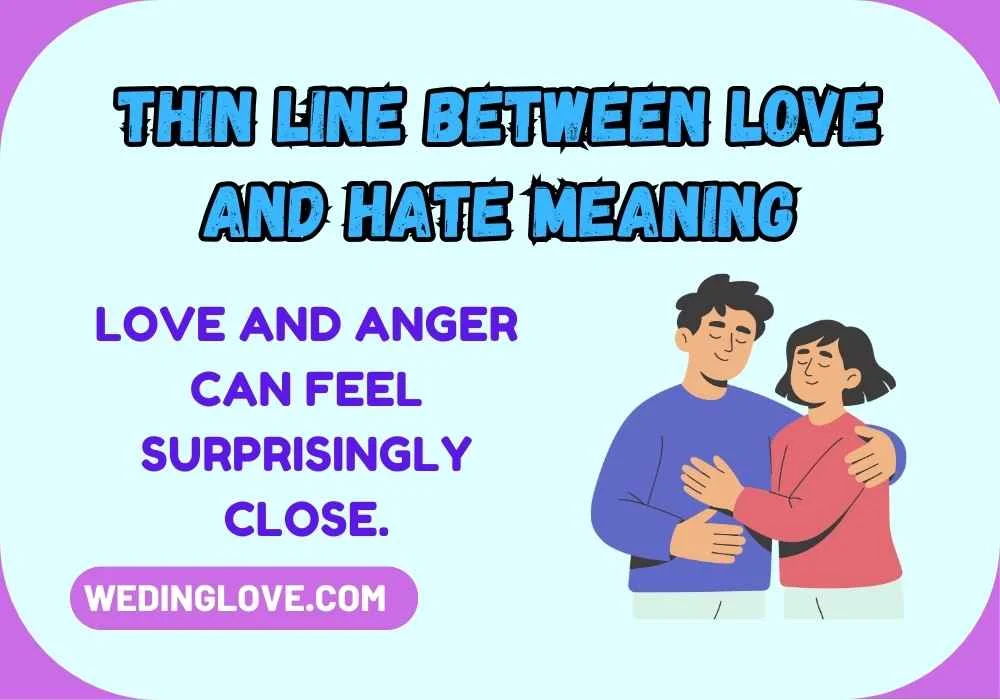
Thin line between love and hate meaning reflects one of the most powerful and confusing human emotions people experience in relationships.
The phrase suggests that love and hate are closely connected, and strong feelings can quickly shift from deep affection to intense resentment. In many romantic relationships, friendships, and emotional bonds, passion can create both devotion and conflict, making emotions feel unpredictable.
Understanding the thin line between love and hate meaning helps explain why people who care deeply can also feel anger, jealousy, or frustration toward the same person.
Psychology, emotional attachment, and relationship dynamics all play a role in how these feelings evolve. When emotions run high, the difference between passionate love and bitter hate can become surprisingly small.
Why the Slang Matters
The phrase “thin line between love and hate” remains popular because it explains something many people experience: intense emotions often overlap.
Here’s why it matters in modern communication:
- Expresses strong feelings quickly in conversations
- Explains relationship conflicts in a relatable way
- Fits perfectly in memes and captions about drama or passion
- Highlights emotional contradictions people experience daily
In online culture, short expressions that capture complex feelings spread quickly. This phrase does exactly that. It allows someone to describe love, frustration, jealousy, and attachment all at once.
For example, when someone says:
“There’s a thin line between love and hate.”
They usually mean the emotions involved are very intense, and those feelings could easily change direction.
Why People Misunderstand It
Even though the phrase is common, people often misunderstand it.
Some assume it means love always turns into hate, which is not true. Instead, the phrase suggests strong emotions can easily shift when feelings are intense.
Common misunderstandings include:
1. Thinking it literally means love becomes hate
The phrase actually highlights how closely related intense emotions can be, not that they always switch.
2. Assuming it’s only about romantic relationships
It can also apply to friendships, celebrities, fandoms, teams, or even favorite foods.
3. Believing it’s always negative
Sometimes people use it humorously to describe love-hate relationships with things like social media, games, or TV shows.
Understanding the context helps you see what someone truly means when they use the phrase.
What Does “Thin Line Between Love and Hate” Mean?
Simple Definition
Thin line between love and hate meaning:
A phrase used to describe how strong love and strong dislike can be emotionally close, making it easy for feelings to shift between the two.
Origin and Evolution
The phrase has existed for decades and became widely recognized through movies, books, music, and relationship advice. Over time, it evolved into a common saying in everyday language.
In modern internet culture, the phrase appears in:
- Relationship memes
- Social media debates
- Celebrity fandom discussions
- Gaming or sports rivalries
People use it to describe situations where passion turns into frustration or criticism.
TL;DR
Thin line between love and hate:
When emotions are very strong, love and anger can feel surprisingly close.
How to Use “Thin Line Between Love and Hate”
Understanding when and how to use this phrase makes conversations clearer and more relatable.
When to Use It
Use the phrase when describing intense emotions or dramatic changes in feelings.
Examples include:
- Relationship arguments
- Passionate fandoms
- Competitive rivalries
- Love-hate hobbies or habits
Example text message:
“We argue all the time, but we still care about each other. There’s a thin line between love and hate.”
When to Avoid It
Avoid using the phrase when:
- Talking about serious hatred or abuse
- Describing casual dislikes
- The situation doesn’t involve strong emotions
The expression works best when emotions are deep and passionate.
Tone and Intent
The tone depends on the situation. It can be:
- Serious – describing relationship conflict
- Humorous – joking about annoying friends
- Dramatic – used in storytelling or captions
- Reflective – explaining emotional complexity
Contexts Where It Appears
People commonly use this phrase in several online spaces.
Texting
Friends may use it to explain arguments or emotional drama.
Social Media
Captions often describe love-hate relationships with trends, celebrities, or experiences.
Discord & Gaming
Players sometimes say it when they feel both excitement and frustration toward a game.
Example:
“This game is amazing but also rage-inducing. Thin line between love and hate.”
Forums and Discussions
People use it in debates where passionate opinions quickly become criticism.
Real Life Examples
Text Chat Examples
1: Friend:
“You two fight all the time.”
2: Friend :
“Yeah… thin line between love and hate.”
Friend A:
“Why do you keep watching that show if you hate it?”
Friend B:
“Because it’s entertaining. Thin line between love and hate.”
Social Media Caption Examples
- “That moment when your favorite show disappoints you… thin line between love and hate.”
- “Love my friends but they drive me crazy sometimes 😂 thin line between love and hate.”
- “Being a fan of this team is stressful… thin line between love and hate.”
Funny or Relatable Scenarios
Scenario 1: Gaming
A player loves a game but keeps losing.
“This game is incredible… but also the most frustrating thing ever. Thin line between love and hate.”
Scenario 2: Food
Someone loves spicy food but regrets it afterward.
“Spicy noodles taste amazing… until they destroy your stomach. Thin line between love and hate.”
Scenario 3: Work
Someone enjoys their job but dislikes stressful deadlines.
“Love my job, hate the deadlines. Thin line between love and hate.”
Correct vs Incorrect Usage
Correct:
“They care about each other a lot. Sometimes there’s a thin line between love and hate.”
Incorrect:
“I slightly dislike this movie. Thin line between love and hate.”
Why incorrect?
The phrase requires strong emotions, not mild opinions.
Common Mistakes and Misunderstandings
1. Using It for Small Dislikes
The phrase is meant for intense feelings, not minor annoyances.
Incorrect:
“I don’t like this snack. Thin line between love and hate.”
2. Taking It Literally
The phrase is figurative, not a rule about emotions.
People can love someone deeply without ever hating them.
3. Using It in Serious Conflict
Avoid using it when discussing serious emotional harm or abuse. In those cases, the phrase can sound dismissive.
4. Misinterpreting the Tone
Sometimes the phrase is used humorously or dramatically, not literally.
Online conversations often exaggerate emotions for entertainment.
Related Slang and Variations
Many expressions communicate similar emotional contradictions.
Similar Phrases
- Love-hate relationship
- Mixed feelings
- Can’t live with it, can’t live without it
- So bad it’s good
Each phrase describes situations where people feel both positive and negative emotions.
Platform-Specific Usage
Different platforms use the phrase slightly differently.
TikTok
Often used in dramatic captions about relationships or trends.
X (formerly Twitter)
Used in quick opinions about shows, celebrities, or internet drama.
Discord
Gamers use it to describe games they enjoy but find frustrating.
Memes
Memes exaggerate the idea with jokes about fandoms, hobbies, or daily struggles.
Freshness (2026 Trends)
In 2026, the phrase continues to appear across digital culture, especially in memes and relatable content.
Popular modern uses include:
1. Fandom culture
Fans love shows, artists, or games but criticize them passionately.
Example:
“Fans complaining about the show they watch every week… thin line between love and hate.”
2. Relationship humor
Creators post short skits showing couples arguing but caring about each other.
3. Gaming communities
Gamers frequently joke about loving a game that constantly frustrates them.
4. Viral memes
Memes often compare obsession vs frustration, using this phrase to highlight emotional contrast.
FAQs
1. What does “thin line between love and hate” mean?
It means strong love and strong dislike can be emotionally close, making it easy for feelings to shift between them.
2. Is the phrase about romantic relationships only?
No. It can apply to friendships, hobbies, fandoms, games, and everyday situations.
3. Why do people say love and hate are similar?
Both emotions involve intensity and passion, which can make them feel closely connected.
4. Is the phrase serious or humorous?
It can be both. People use it seriously in discussions about relationships and humorously in memes.
5. Can love really turn into hate?
Sometimes strong emotions can shift when people feel hurt or disappointed, which is why the phrase exists.
6. Is the phrase still popular online?
Yes. It remains common in memes, captions, discussions, and casual conversations.
7. What is a love-hate relationship?
It describes a situation where someone both enjoys and dislikes something at the same time.
8. When should I avoid using the phrase?
Avoid using it when discussing serious emotional harm or sensitive conflicts.
9. Why do memes use this phrase so often?
Because it quickly explains relatable emotional contradictions people experience daily.
10. Is the phrase considered slang?
It is more of a popular idiom or expression, but it functions similarly to modern internet slang.
Conclusion
The thin line between love and hate meaning highlights how powerful emotions can be closely connected. When feelings are intense, affection and frustration may exist side by side. That’s why the phrase appears frequently in conversations about relationships, fandoms, hobbies, and internet culture.
From text messages to memes, the expression helps people explain emotional contradictions in a simple, relatable way. Understanding how and when to use it makes communication clearer and more expressive.
If you’ve ever loved something so much that it sometimes drives you crazy, you already understand the idea behind this phrase.
Comment your favorite slang! 😊

Smith is a passionate relationship writer at wedinglove.com, sharing heartfelt ideas, anniversary inspirations, and love-filled moments. With a deep belief in lifelong bonds, Smith helps couples celebrate every milestone with meaning, emotion, and timeless romance.