Trait meaning refers to a distinct characteristic, quality, or feature that defines a person’s behavior, personality, or nature. In psychology, everyday language, and even biology, a trait helps explain how someone thinks, feels, or acts over time rather than in a single moment. Understanding trait meaning is essential for recognizing individual differences, building self-awareness, and improving communication and relationships.
A trait can describe positive qualities like honesty, patience, or creativity, as well as negative characteristics such as stubbornness or impatience. These traits are often shaped by genetics, upbringing, life experiences, and environment, making them an important part of personal identity.
Knowing the true trait meaning also helps students, writers, and professionals interpret human behavior, analyze personalities, and use the term accurately in writing or conversation. By learning trait meaning in depth, readers gain clearer insight into human character, personal development, and behavioral patterns that influence everyday life.
Why Trait Meaning Matters Today
Traits help people describe who they are and understand others better. In modern digital communication, one word can shape opinions quickly.
People use traits to:
- Describe personality in bios and profiles
- Explain behavior in chats
- Label habits, strengths, or weaknesses
- Understand relationships and compatibility
A single trait can change how a message is perceived.
Why People Misunderstand Trait Meaning
Many people confuse traits with:
- Temporary moods
- Skills
- Emotions
- Habits
This causes misuse in texts and posts. Traits are long-term qualities, not short-term feelings. Understanding this difference avoids confusion and miscommunication.
What Does “Trait” Mean?
Simple Definition
A trait is a natural or learned characteristic that describes how a person usually thinks, feels, or behaves.
👉 Traits are consistent over time.
Examples:
- Kind
- Honest
- Introverted
- Creative
- Impatient
Origin and Evolution
The word trait comes from an old French term meaning a distinguishing feature. Over time, it became widely used in psychology, education, and everyday conversation.
In modern chat culture, people use it casually to explain behavior:
“That’s just one of my traits.”
TL;DR
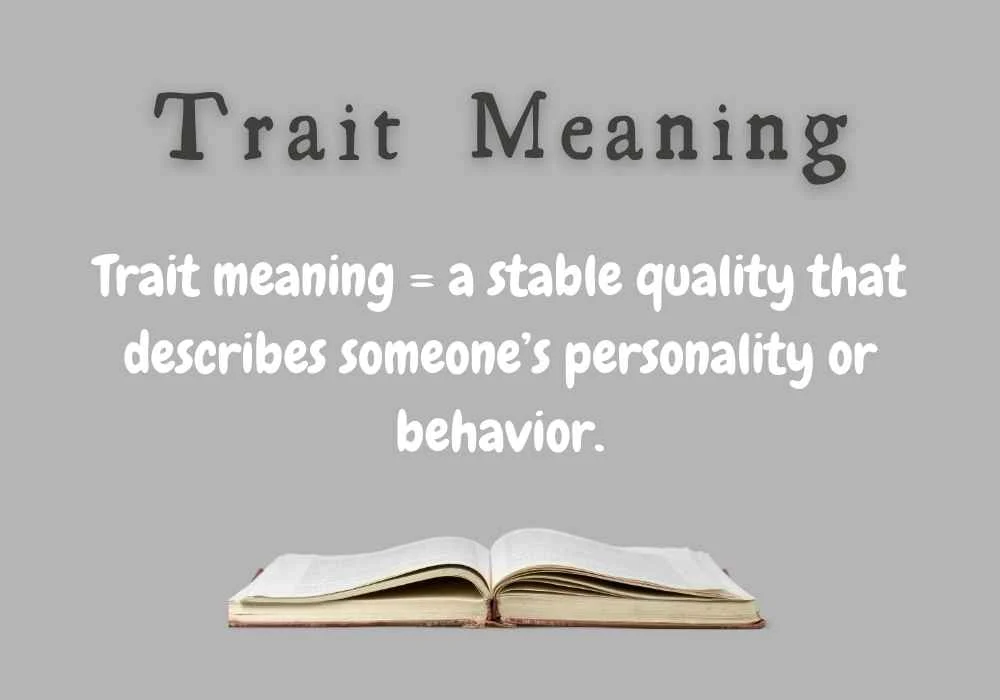
Trait meaning = a stable quality that describes someone’s personality or behavior.
How to Use “Trait” Correctly
When to Use It
Use trait when talking about:
- Personality patterns
- Long-term behavior
- Natural tendencies
Example:
“Being calm under pressure is one of her strongest traits.”
When to Avoid It
Avoid using trait for:
- Temporary emotions
- One-time actions
- Short moods
Incorrect:
“Being tired today is my trait.”
Tone and Intent
The tone is usually:
- Neutral
- Descriptive
- Analytical
It’s not emotional by default—it explains what someone is like.
Trait Meaning Across Different Platforms
Texting
Used to explain behavior quickly:
“Overthinking is a bad trait of mine.”
Social Media
Often appears in captions and bios:
“Loyalty is my strongest trait.”
Discord & Gaming
Used to describe play style or personality:
“Patience is an important trait for this game.”
Forums
Common in advice discussions:
“Confidence is a trait you can build over time.”
Real Life Examples
Text Chat Examples
- “Being honest is a trait I value.”
- “That’s a common trait among leaders.”
Social Caption Examples
- “Empathy is my favorite trait.”
- “Growth mindset is a powerful trait.”
Funny & Relatable Scenarios
- “My toxic trait is thinking I’ll sleep early.”
- “Overanalyzing every message is my hidden trait.”
Correct vs Incorrect Usage
✅ Correct
- “Kindness is an important trait.”
- “Patience is a learned trait.”
❌ Incorrect
- “Being hungry is my trait.”
- “Crying once is a trait.”
Common Mistakes & Misunderstandings
- Using trait instead of mood
- Confusing skills with traits
- Treating habits as traits without consistency
- Assuming traits cannot change
Truth: Traits can evolve over time, but they don’t change overnight.
Related Slang & Variations
Similar Terms
- Personality
- Character
- Quality
- Attribute
- Nature
Platform-Specific Usage
- “Toxic trait” (used humorously online)
- “Core trait” (used in self-growth content)
- “Personality trait” (formal but common)
Trait Meaning in 2026 Trends
In 2026, trait-related content is booming on:
- Short video platforms
- Profile-based apps
- Self-improvement communities
Trending phrases include:
- “My worst trait is…”
- “Name a trait you admire”
- “Unpopular personality traits”
People now use traits for self-awareness, not just labels.
FAQs
1. What is the simple meaning of trait?
A trait is a long-term quality that describes how someone usually behaves.
2. Is a trait the same as a habit?
No. Habits are repeated actions; traits describe personality.
3. Can traits change over time?
Yes, traits can develop gradually with experience.
4. Is being shy a trait?
Yes, shyness is considered a personality trait.
5. Is intelligence a trait?
It’s often considered a cognitive trait.
6. Are traits always genetic?
No, many traits are learned through environment and experience.
7. What does “toxic trait” mean online?
It’s a humorous way to describe a negative personality habit.
8. Is confidence a trait or a skill?
It can be both, depending on context.
9. Are emotions traits?
No, emotions are temporary, traits are stable.
10. Why do people use traits in bios?
To quickly describe personality and values.
Conclusion
Trait meaning refers to the lasting qualities that shape how a person thinks, feels, and behaves.
In today’s fast digital world, understanding traits helps people communicate clearly, avoid misunderstandings, and express identity better.
Traits aren’t labels—they’re insights into human behavior.
👉 Comment your favorite slang!

Smith is a passionate relationship writer at wedinglove.com, sharing heartfelt ideas, anniversary inspirations, and love-filled moments. With a deep belief in lifelong bonds, Smith helps couples celebrate every milestone with meaning, emotion, and timeless romance.