Wilderness meaning refers to a vast, untouched natural area where human influence is minimal or completely absent. It describes places dominated by raw nature, including dense forests, remote mountains, deserts, wetlands, and wildlife-rich landscapes that remain largely unspoiled by modern development.
Understanding the true wilderness meaning helps readers grasp why these areas are vital for biodiversity, ecological balance, and environmental preservation. In geography and environmental studies, wilderness often symbolizes freedom, isolation, and natural beauty, offering a sharp contrast to urban life.
From a legal and conservation perspective, wilderness areas are protected to conserve native ecosystems, endangered species, and natural resources. The term also carries cultural and emotional significance, representing adventure, survival, and a deep connection with nature.
Why the Slang Matters
Language changes fast. Words that once had only literal meanings now carry emotional, cultural, or slang-based interpretations.
The wilderness meaning matters because:
- It’s used to express feelings, not just places
- It appears in modern storytelling, memes, and captions
- Misunderstanding it can lead to confusion or wrong assumptions
In short, knowing the updated meaning helps you read between the lines online.
Why People Misunderstand It
People misunderstand wilderness meaning because:
- They assume it’s always about nature
- Context is often emotional, not physical
- Online usage is symbolic or exaggerated
- It’s used differently across platforms
Without context, the word can feel vague or misleading.
What Does Wilderness Meaning Really Mean?
Simple Definition
Wilderness meaning refers to a state of being untamed, lost, unexplored, emotionally distant, or mentally overwhelmed, not just a wild physical place.
In modern usage, it often describes feelings or situations, not landscapes.
Origin & Evolution
Originally, wilderness described uncultivated land—forests, deserts, and areas untouched by humans.
Over time, people began using it metaphorically:
- Emotional wilderness → feeling lost
- Social wilderness → isolation
- Mental wilderness → confusion or burnout
By 2026, it’s commonly used in expressive online language.
TL;DR
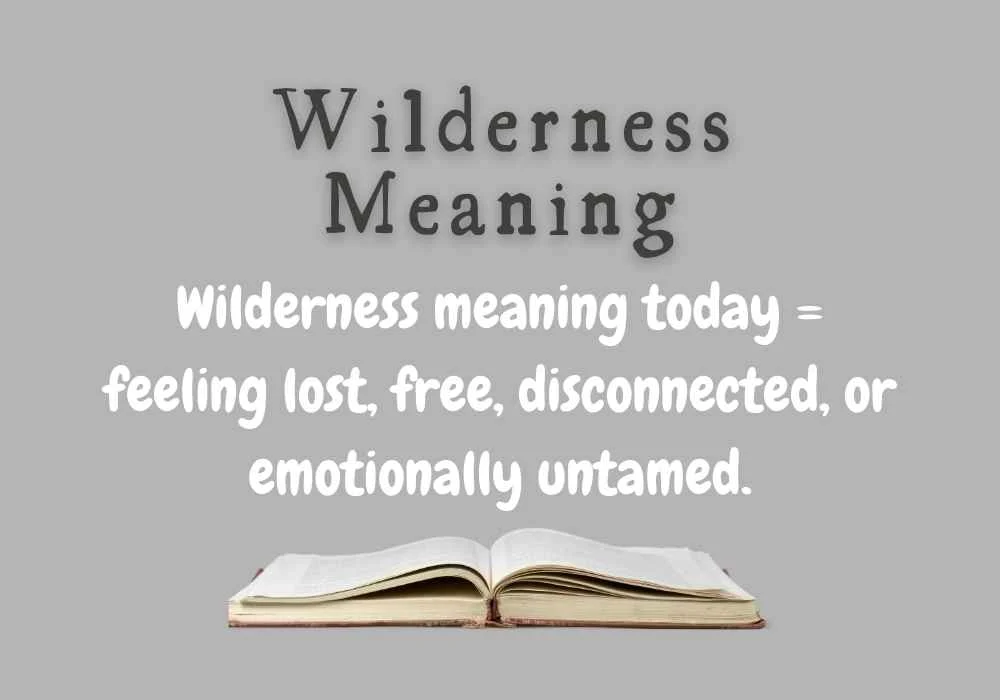
Wilderness meaning today = feeling lost, free, disconnected, or emotionally untamed.
How to Use Wilderness Meaning
When to Use It
Use it when describing:
- Emotional confusion
- Freedom from structure
- Isolation or self-discovery
- Mental overload
- Life transitions
When to Avoid It
Avoid using it when:
- You mean a specific location
- Clarity is required (formal writing)
- The audience may take it literally
Tone & Intent
The tone is usually:
- Reflective
- Dramatic
- Emotional
- Poetic
- Sometimes humorous
Intent depends on context—expression over precision.
Common Contexts
Texting
Used to express mental or emotional states.
Social Media
Often poetic or aesthetic.
Discord
Describes chaotic chats or personal moods.
Gaming
Refers to unexplored zones or solo gameplay.
Forums
Used metaphorically for confusion or lack of guidance.
Real Life Examples
Text Chat Examples
- “I’ve been in the wilderness lately, mentally.”
- “After quitting my job, it felt like total wilderness.”
Social Media Captions
- “Lost in my own wilderness 🌲”
- “Healing happens in the wilderness.”
Funny or Relatable Scenarios
-
When you open 20 tabs and forget why
→ “My brain is a wilderness right now.” -
When group chat goes silent
→ “This chat is the wilderness.”
Correct vs Incorrect Usage
Correct:
- “Post-breakup life feels like a wilderness.”
Incorrect:
- “I’m in the wilderness” (when you mean you’re busy)
Common Mistakes & Misunderstandings
- Thinking it always means nature
- Using it without context
- Mixing it up with “lost physically”
- Assuming everyone understands the metaphor
Clarity comes from how you use it, not the word itself.
Related Slang & Variations
Similar Terms
- Lost era
- Off the grid
- In my void
- Uncharted phase
- Mental maze
Platform-Specific Usage
- TikTok: Emotional healing and self-growth
- X: Short, dramatic statements
- Memes: Chaos or confusion jokes
- Chats: Personal mood expression
Freshness: 2026 Trends
In 2026, wilderness meaning is trending in:
- Mental health conversations
- Solo travel content
- Digital detox discussions
- Burnout memes
- Self-discovery narratives
It’s increasingly tied to identity and emotional honesty.
Frequently Asked Questions (FAQs)
1. What is the modern wilderness meaning?
It describes emotional or mental states, not just wild places.
2. Is wilderness used as slang?
Yes, especially online and in casual conversations.
3. Does it mean being lonely?
Sometimes, but it can also mean freedom or growth.
4. Can wilderness be positive?
Absolutely. It often symbolizes healing or self-discovery.
5. Is it common on social media?
Yes, especially in captions and storytelling posts.
6. Does it always imply confusion?
No. It can also mean independence.
7. Is it used differently on TikTok?
TikTok uses it more emotionally and aesthetically.
8. Can wilderness describe mental health?
Yes, it’s often used metaphorically for burnout or stress.
9. Is it okay to use in formal writing?
Only if clearly defined or used metaphorically.
10. Why is wilderness trending again?
People relate it to modern life confusion and self-growth.
Conclusion
Wilderness meaning has evolved into a powerful way to express emotions, confusion, freedom, and transformation.
In today’s digital world, it’s less about forests and more about what’s happening inside us.
Understanding the context helps you use it correctly—and connect better online.
💬 Comment your favorite slang!

Smith is a passionate relationship writer at wedinglove.com, sharing heartfelt ideas, anniversary inspirations, and love-filled moments. With a deep belief in lifelong bonds, Smith helps couples celebrate every milestone with meaning, emotion, and timeless romance.